CATEGORY: Goldfish
Goldfish are among the world’s most popular pet fish, admired for their vibrant colors, graceful swimming, and surprisingly intelligent behavior. While many people assume goldfish are simple pets that can thrive in a small bowl, the truth is quite different. Goldfish require proper housing, excellent water quality, a balanced diet, and regular care to live long, healthy lives.
Whether you are purchasing your very first goldfish or upgrading your existing aquarium, understanding their needs is essential. This comprehensive guide explains everything you need to know about goldfish care, helping you create the ideal environment for these fascinating freshwater fish.
—
The History of Goldfish
Goldfish (Carassius auratus) were first domesticated in China more than 1,000 years ago. They were selectively bred from wild Prussian carp, gradually producing the beautiful orange, red, white, black, and calico varieties we see today.
Over centuries, goldfish spread throughout Asia, Europe, and eventually the rest of the world, becoming one of the oldest domesticated ornamental fish species.
Today, hundreds of varieties exist, ranging from sleek single-tailed goldfish to elegant fancy breeds with flowing fins and unique body shapes.
—
Are Goldfish Good Pets?
Goldfish are excellent pets for many households because they are:
- Beautiful to watch
- Peaceful by nature
- Long-lived
- Easy to bond with
- Active during the day
- Suitable for beginners with proper preparation
Many owners are surprised to discover that goldfish can recognize their caretaker and even swim to the front of the aquarium when feeding time approaches.
—
How Long Do Goldfish Live?
One of the biggest misconceptions is that goldfish only live a few years.
In reality:
- Average lifespan: 10–15 years
- Well cared for: 20 years or more
- Record lifespan: Over 40 years
Poor water quality—not old age—is the most common reason goldfish die prematurely.
—
Popular Types of Goldfish
There are two main categories.
Single-Tailed Goldfish
These are faster swimmers and generally hardier.
Examples include:
- Common Goldfish
- Comet Goldfish
- Shubunkin Goldfish
These varieties are ideal for ponds and large aquariums.
—
Fancy Goldfish
Fancy varieties have rounded bodies and decorative fins.
Popular breeds include:
- Oranda
- Ranchu
- Ryukin
- Fantail
- Black Moor
- Pearlscale
- Telescope Eye
- Lionhead
- Bubble Eye
Fancy goldfish require slightly more specialized care because their body shape makes them slower swimmers and sometimes more sensitive to health issues.
—
Choosing the Right Aquarium
One of the biggest mistakes new owners make is purchasing a small fish bowl.
Goldfish produce a significant amount of waste and require much more space than most people expect.
A better guideline is:
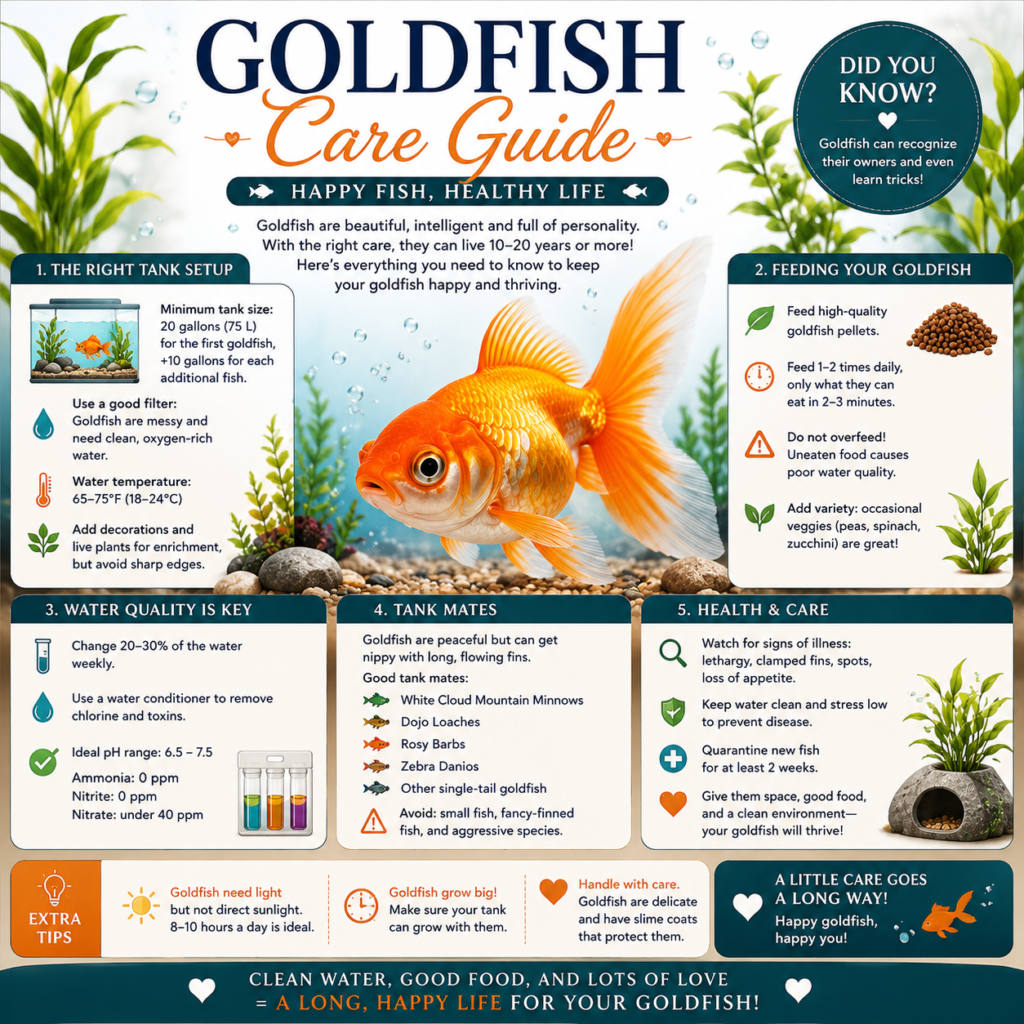
- One fancy goldfish: 75 liters (20 gallons) minimum
- Additional fancy goldfish: 40 liters (10 gallons) each
- One common goldfish: 110–150 liters (30–40 gallons)
- Adult common goldfish often thrive better in outdoor ponds.
Larger aquariums maintain more stable water conditions and are easier to keep clean.
—
Why Fish Bowls Are Not Suitable
Traditional bowls create several problems:
- Poor oxygen exchange
- Rapid waste buildup
- Limited swimming space
- Unstable temperatures
- Difficult filtration
Contrary to popular belief, bowls shorten a goldfish’s lifespan rather than helping it thrive.
—
Water Temperature
Goldfish are cold-water fish.
Ideal temperatures include:
- Fancy goldfish: 20–24°C
- Common goldfish: 18–22°C
They tolerate seasonal fluctuations better than tropical fish but should never experience sudden temperature changes.
—
Water Quality
Clean water is the most important aspect of goldfish care.
Essential parameters include:
- pH: 7.0–8.0
- Ammonia: 0 ppm
- Nitrite: 0 ppm
- Nitrate: Under 40 ppm
Testing water weekly helps prevent invisible problems before they become dangerous.
—
Filtration
Goldfish are heavy waste producers.
Choose a filter capable of processing at least:
6–10 times the aquarium volume every hour.
Quality filters provide:
- Mechanical filtration
- Biological filtration
- Chemical filtration (optional)
Never replace all filter media at once, as this destroys beneficial bacteria.
—
Cycling a New Aquarium
Before adding goldfish, the aquarium should complete the nitrogen cycle.
This process establishes beneficial bacteria that convert toxic ammonia into less harmful nitrate.
Skipping this step often leads to ammonia poisoning.
Cycling usually takes several weeks but greatly improves long-term fish health.
—
Aquarium Decorations
Goldfish enjoy exploring their surroundings.
Good decorations include:
- Smooth stones
- Driftwood
- Rounded ornaments
- Open swimming areas
Avoid:
- Sharp decorations
- Tiny openings
- Rough artificial rocks
Fancy goldfish can easily damage delicate fins.
—
Best Plants for Goldfish
Goldfish sometimes nibble live plants.
Durable choices include:
- Java Fern
- Anubias
- Hornwort
- Vallisneria
- Amazon Sword
Floating plants can also provide shade while improving water quality.
—
Feeding Goldfish
Goldfish are omnivores.
A varied diet produces brighter colors and better health.
Quality foods include:
- Premium goldfish pellets
- Goldfish flakes
- Gel food
- Frozen bloodworms
- Brine shrimp
- Daphnia
Vegetables are equally important.
Healthy options include:
- Peas (peeled)
- Spinach
- Lettuce
- Zucchini
- Cucumber
—
How Often Should Goldfish Eat?
Most adult goldfish should eat:
- Once or twice daily
Offer only what they can consume within two minutes.
Overfeeding is a leading cause of aquarium pollution.
—
Foods to Avoid
Avoid feeding:
- Bread
- Rice
- Crackers
- Processed human food
- Fatty meats
- Sugary foods
These foods offer little nutritional value and may cause digestive problems.
—
Can Goldfish Live with Other Fish?
Goldfish can live peacefully with compatible species.
Suitable companions include:
- White Cloud Mountain Minnows
- Weather Loaches
- Hillstream Loaches (in appropriate setups)
- Other similar-sized goldfish
Avoid mixing goldfish with:
- Tropical fish requiring warm water
- Aggressive species
- Fin-nippers
- Tiny fish that may become prey
Fancy goldfish are best kept with other fancy goldfish.
—
Common Goldfish Behavior
Healthy goldfish usually:
- Swim actively
- Explore the aquarium
- Search for food
- Interact with owners
- Rest occasionally near the bottom
Watching your fish regularly helps identify health problems early.
—
Signs of Stress
Warning signs include:
- Clamped fins
- Gasping at the surface
- Lethargy
- Loss of appetite
- Flashing against decorations
- Hiding continuously
Most stress originates from poor water quality.
—
Common Goldfish Diseases
Some common illnesses include:
Ich (White Spot Disease)
Symptoms:
- White spots
- Scratching
- Rapid breathing
Treatment usually involves aquarium-safe medications and improved water quality.
—
Swim Bladder Disorder
Symptoms:
- Floating upside down
- Difficulty swimming
- Sinking
Causes include constipation, infection, or poor diet.
—
Fin Rot
Symptoms:
- Ragged fins
- Black or white fin edges
- Red streaks
Usually linked to poor water conditions.
—
Fungal Infections
Appear as cotton-like white growths.
Prompt treatment prevents spread.
—
Dropsy
A serious condition marked by:
- Swollen abdomen
- Pinecone-shaped scales
- Lethargy
Immediate treatment is recommended, although prognosis is often poor.
—
Preventing Disease
Healthy goldfish depend on prevention.
Maintain:
- Stable water quality
- Regular water changes
- Balanced nutrition
- Quarantine for new fish
- Clean equipment
Healthy environments dramatically reduce disease risk.
—
Water Changes
Regular maintenance is essential.
Most aquariums benefit from:
- 25–40% weekly water changes
Always use a quality water conditioner to remove chlorine and chloramine from tap water.
—
Cleaning the Aquarium
During maintenance:
- Vacuum gravel
- Remove algae if excessive
- Clean decorations gently
- Rinse filter media in aquarium water
- Replace evaporated water
Avoid completely sterilizing the aquarium, as beneficial bacteria are essential.
—
Do Goldfish Sleep?
Yes.
Goldfish do not close their eyes because they lack eyelids.
Instead, they rest quietly near the bottom or among decorations, becoming less active during nighttime.
Providing a regular day-night lighting cycle supports their natural behavior.
—
Can Goldfish Recognize Their Owners?
Research and owner observations suggest they can.
Many goldfish:
- Recognize feeding routines
- Swim toward familiar people
- Learn simple patterns
- Become surprisingly interactive
Their intelligence is often underestimated.
—
Outdoor Goldfish Ponds
Common goldfish and comet goldfish thrive in ponds.
Benefits include:
- Natural sunlight
- Larger swimming space
- Seasonal breeding
- Enhanced coloration
Outdoor ponds should provide:
- Adequate depth
- Good filtration
- Predator protection
- Shade during summer
—
Breeding Goldfish
Healthy adults may breed naturally.
During breeding season:
- Males chase females.
- Females scatter adhesive eggs among plants.
- Eggs hatch within several days depending on water temperature.
Adult goldfish often eat eggs and fry, so breeders usually separate them.
—
Fun Facts About Goldfish
- Goldfish can distinguish colors.
- They possess excellent memory, far beyond the popular “three-second memory” myth.
- Some can recognize individual humans.
- They communicate through body language.
- Goldfish continue growing throughout life if provided with adequate space.
- They are related to carp.
- Certain fancy varieties are hundreds of years old through selective breeding.
—
🦋 Is a Goldfish the Right Pet for You?
Goldfish are rewarding companions for families, children, and experienced aquarists alike. Their graceful swimming, curious personalities, and remarkable longevity make them far more than simple decorative pets.
Providing sufficient space, excellent filtration, clean water, proper nutrition, and routine maintenance allows goldfish to thrive for decades. Understanding that these fish require genuine care—not just a bowl of water—is the key to enjoying one of the most fascinating freshwater pets available.
Whether you choose a hardy common goldfish or an elegant fancy variety, investing time in proper husbandry will reward you with a healthy, active companion that brings beauty and life to your home for many years.
The End,
PawBearing
 Discover More From Our Family of Websites
 ZodiacBearing (Astrology, Tarot, Numerology, Angel Numbers & Spiritual Guidance)
 Velourana (Beauty, Makeup, Hair Care, Skincare & Beauty Tips)
 HavenBearing (Home, Living, Organization, Décor & Everyday Inspiration)
 PawBearing (Pet Care, Dog Breeds, Animal Health, Training & Pet Products)
 PsyCatherine (Notes From the Journal of a Psychologist on Real Life)