CATEGORY: Goldfish
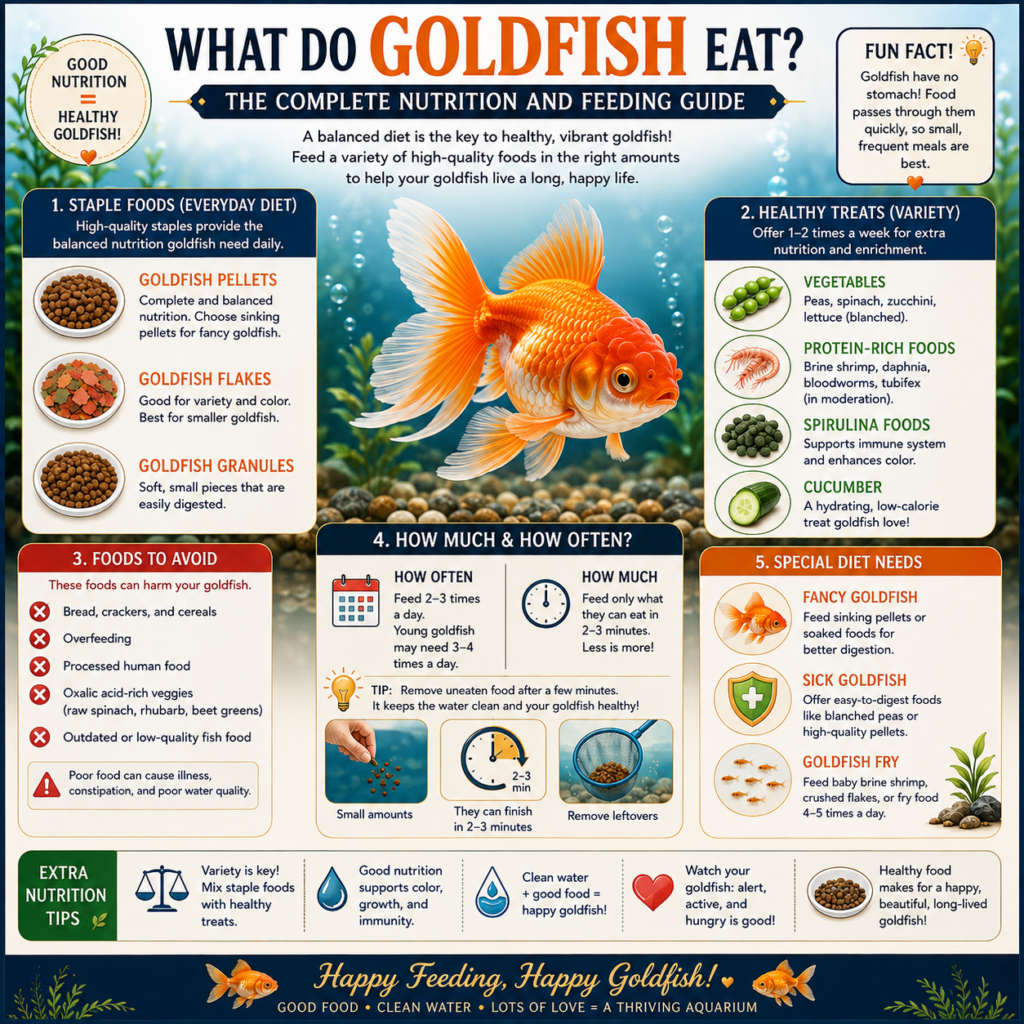
Feeding a goldfish may seem as simple as sprinkling a few flakes into the aquarium, but proper nutrition is one of the most important factors in maintaining a healthy, active, and long-lived fish. Goldfish are opportunistic omnivores with diverse dietary needs that cannot be met by low-quality food alone.
A balanced diet supports healthy growth, vibrant coloration, a strong immune system, proper digestion, and successful reproduction. Poor nutrition, on the other hand, can contribute to obesity, swim bladder disorders, constipation, weakened immunity, and shortened lifespans.
This complete guide explains everything you need to know about feeding goldfish, including the best foods, feeding schedules, portion sizes, treats, foods to avoid, and common mistakes.
—
Understanding a Goldfish’s Natural Diet
Wild ancestors of modern goldfish spend much of their day searching for food.
In their natural environment, they eat:
- Aquatic plants
- Algae
- Insect larvae
- Small crustaceans
- Worms
- Tiny snails
- Organic plant matter
- Microscopic organisms
This varied diet provides the nutrients they need for healthy development.
Domestic goldfish benefit from a similarly diverse menu rather than relying on a single type of commercial food.
—
Are Goldfish Omnivores?
Yes.
Goldfish are omnivores, meaning they require both plant-based and animal-based foods.
An ideal diet contains:
- High-quality proteins
- Fiber
- Healthy fats
- Vitamins
- Minerals
- Plant matter
Offering a variety of foods helps replicate their natural feeding habits.
—
The Best Commercial Goldfish Foods
Commercial diets form the foundation of most feeding programs.
However, quality varies considerably.
Look for foods specifically formulated for goldfish.
—
Goldfish Pellets
Premium pellets are often the preferred staple food.
Advantages include:
- Balanced nutrition
- Consistent ingredients
- Less waste
- Easy portion control
- Available in floating and sinking forms
Many experienced keepers recommend sinking pellets, especially for fancy goldfish, because they reduce the amount of air swallowed during feeding.
—
Goldfish Flakes
Flakes remain popular, particularly for young fish.
Benefits include:
- Easy availability
- Simple feeding
- Suitable for smaller goldfish
However, flakes break apart easily and can contribute to water pollution if overfed.
—
Gel Food
Gel foods have become increasingly popular.
Advantages:
- Soft texture
- Excellent digestibility
- High moisture content
- Reduced constipation risk
- Customizable recipes for homemade versions
Many breeders consider gel food one of the healthiest staple diets for fancy goldfish.
—
Frozen Foods
Frozen foods provide valuable protein and enrichment.
Excellent options include:
- Bloodworms
- Brine shrimp
- Daphnia
- Mysis shrimp
- Mosquito larvae
Always thaw frozen foods before feeding.
—
Live Foods
Live foods encourage natural hunting behavior.
Popular choices include:
- Daphnia
- Brine shrimp
- Blackworms
- Tubifex worms (from reputable sources)
Because live foods may occasionally introduce parasites or bacteria, purchase them only from trusted suppliers.
—
Vegetables Goldfish Can Eat
Vegetables are an important part of a balanced diet.
Safe choices include:
Peas
One of the most recommended foods.
Peas:
- Aid digestion
- Help prevent constipation
- May assist fish experiencing buoyancy problems
Always remove the outer skin before feeding.
—
Spinach
Rich in:
- Vitamins
- Minerals
- Fiber
Lightly blanching spinach makes it easier to eat.
—
Lettuce
Romaine lettuce is preferable to iceberg lettuce because it contains more nutrients.
—
Zucchini
Thin slices of blanched zucchini are readily accepted by many goldfish.
—
Cucumber
Soft cucumber slices offer hydration and variety.
Remove leftovers after several hours.
—
Broccoli
Small blanched florets can be offered occasionally.
—
Fruits Goldfish Can Eat
Fruit should only be an occasional treat due to its natural sugar content.
Safe fruits include:
- Orange segments (without seeds)
- Watermelon
- Strawberries
- Blueberries
- Apple (small pieces)
Offer fruit sparingly.
—
Algae
Goldfish naturally graze on algae growing within the aquarium.
Allowing a light coating of algae on certain surfaces provides both enrichment and supplemental nutrition.
—
Feeding Frequency
Healthy adult goldfish generally thrive when fed:
- Once or twice daily
Young, growing fish may benefit from:
- Three to four smaller meals daily
Multiple small feedings are preferable to one large meal.
—
Portion Size
Feed only what your goldfish can consume within:
Approximately two minutes.
Overfeeding causes:
- Poor water quality
- Obesity
- Digestive problems
- Increased ammonia production
If food remains after several minutes, too much has been offered.
—
Floating vs. Sinking Foods
Floating Foods
Advantages:
- Easy to observe feeding
- Convenient for owners
Disadvantages:
- Increased air swallowing
- Possible buoyancy issues in fancy goldfish
—
Sinking Foods
Advantages:
- More natural feeding behavior
- Reduced air intake
- Better for rounded fancy varieties
Many experienced keepers prefer sinking pellets as the primary diet.
—
Treat Foods
Occasional treats add variety.
Good treats include:
- Bloodworms
- Brine shrimp
- Daphnia
- Cooked peas
- Small earthworms
- Gel foods
- Vegetables
Treats should supplement rather than replace a balanced staple diet.
—
Foods to Avoid
Certain foods are unsuitable for goldfish.
Never feed:
- Bread
- Crackers
- Biscuits
- Rice
- Pasta
- Potato chips
- Chocolate
- Dairy products
- Sugary foods
- Salty snacks
- Processed meats
These foods offer little nutritional value and may harm digestion.
—
Can Goldfish Eat Human Food?
Some fresh vegetables are perfectly safe.
However, most processed human foods contain:
- Salt
- Sugar
- Preservatives
- Oils
- Artificial ingredients
These should be avoided.
—
Feeding During Vacation
For absences shorter than a week, healthy adult goldfish can usually go without food.
For longer trips:
- Ask someone to feed carefully.
- Use high-quality automatic feeders.
- Avoid overfeeding “just in case” before leaving.
Goldfish tolerate short fasting periods surprisingly well.
—
Seasonal Feeding
Outdoor pond goldfish require seasonal adjustments.
In warm weather:
- Feed regularly.
As temperatures decline:
- Reduce feeding.
Below approximately 10°C:
- Switch to easily digestible foods if feeding is still appropriate.
During very cold conditions, pond goldfish often stop eating altogether as their metabolism slows.
—
Feeding Fancy Goldfish
Fancy goldfish require additional consideration.
Recommendations include:
- Sinking pellets
- Smaller meals
- High-fiber foods
- Regular vegetables
- Gel foods
Their compact body shape makes digestive health especially important.
—
Feeding Common Goldfish
Common goldfish generally have:
- Faster metabolisms
- Larger appetites
- Greater swimming activity
They tolerate a wider variety of foods but still benefit from balanced nutrition.
—
Feeding Juvenile Goldfish
Young goldfish require:
- Higher protein levels
- Frequent small meals
- Easily digestible foods
Growth should be steady rather than excessively rapid.
—
Homemade Goldfish Food
Many hobbyists prepare homemade recipes using ingredients such as:
- Fish
- Shrimp
- Spinach
- Peas
- Gelatin
- Spirulina
Homemade diets allow complete control over ingredients but should be nutritionally balanced.
—
Common Feeding Mistakes
Avoid these frequent errors:
- Overfeeding
- Feeding only flakes
- Ignoring vegetables
- Feeding stale food
- Offering oversized pellets
- Leaving uneaten food in the aquarium
- Giving excessive treats
Simple corrections often improve both fish health and water quality.
—
Signs of Good Nutrition
Well-fed goldfish typically display:
- Bright coloration
- Strong appetite
- Smooth swimming
- Healthy fins
- Steady growth
- Clear eyes
- Active behavior
Good nutrition contributes directly to disease resistance.
—
Signs of Poor Nutrition
Potential warning signs include:
- Weight loss
- Faded colors
- Lethargy
- Digestive problems
- Frequent illness
- Slow growth
- Poor fin condition
Reviewing the diet is one of the first steps when these symptoms appear.
—
Storing Goldfish Food
To preserve nutritional quality:
- Keep food sealed.
- Store in a cool, dry location.
- Avoid moisture.
- Replace old food regularly.
Vitamins gradually degrade after opening, so buying smaller containers may help maintain freshness.
—
Final Thoughts
Feeding goldfish properly involves much more than simply providing flakes each day. A nutritious, varied diet that combines high-quality commercial foods with vegetables, occasional protein-rich treats, and careful portion control supports excellent health, vibrant coloration, and a long lifespan.
By avoiding overfeeding, maintaining variety, and selecting foods appropriate for your goldfish’s age and variety, you create the nutritional foundation for a thriving aquarium. Healthy feeding habits, combined with clean water and regular maintenance, allow these intelligent and engaging fish to flourish for many years.
The End,
PawBearing
 Discover More From Our Family of Websites
 ZodiacBearing (Astrology, Tarot, Numerology, Angel Numbers & Spiritual Guidance)
 Velourana (Beauty, Makeup, Hair Care, Skincare & Beauty Tips)
 HavenBearing (Home, Living, Organization, Décor & Everyday Inspiration)
 PawBearing (Pet Care, Dog Breeds, Animal Health, Training & Pet Products)
 PsyCatherine (Notes From the Journal of a Psychologist on Real Life)