CATEGORY: Affenpinscher
The Affenpinscher is one of the most distinctive and entertaining toy dog breeds in the world. Often described as having the face of a tiny monkey, this charming little companion has won the hearts of dog lovers for centuries. Despite standing only a few inches tall, the Affenpinscher possesses remarkable courage, confidence, intelligence, and loyalty that make it seem much larger than its actual size.
Originally developed in Germany to hunt rats and mice in homes, kitchens, and stables, today’s Affenpinscher has transformed into a beloved family companion while retaining the fearless attitude and alertness that once made it an excellent working dog. Their expressive eyes, shaggy coat, playful personality, and almost human facial expressions give them a unique appearance unlike any other breed.
Whether you are considering bringing home an Affenpinscher puppy or simply wish to learn more about this fascinating breed, understanding its history, temperament, care requirements, and health needs is essential for providing the best possible life.
The History of the Affenpinscher
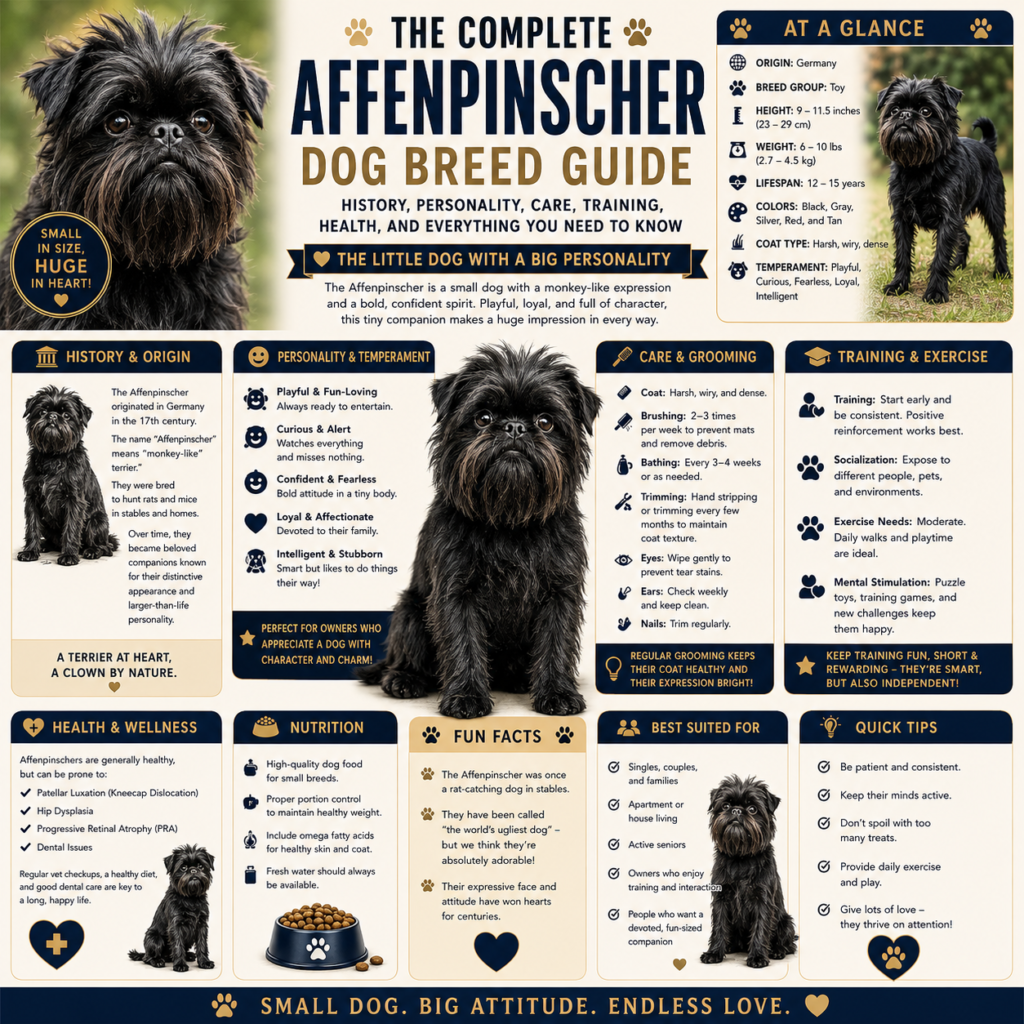
The Affenpinscher originated in Germany during the 1600s, making it one of Europe’s oldest toy breeds. Its name comes from the German word “Affe,” meaning monkey, due to the breed’s distinctive facial expression.
Originally, these dogs were slightly larger than today’s Affenpinschers. Their primary role was practical rather than decorative. They lived in kitchens, shops, warehouses, and stables where they hunted rats, mice, and other small vermin that threatened food supplies.
As time passed, breeders gradually reduced their size while maintaining their fearless personality. The breed slowly transitioned from hardworking pest controller to loyal household companion without losing its confidence and determination.
The Affenpinscher later became popular among European nobility, admired for its unusual appearance and entertaining personality. Today it remains relatively rare compared to many other toy breeds, making ownership especially rewarding for enthusiasts.
Physical Appearance
One look at an Affenpinscher explains why the breed is often called the “Monkey Dog.”
Their rough, wiry coat forms a distinctive beard, bushy eyebrows, and facial furnishings that create an almost comical expression.
Adult Affenpinschers typically weigh between 7 and 10 pounds (3–4.5 kg) while standing around 9 to 11.5 inches (23–29 cm) tall.
Common coat colors include:
Black
The classic and most recognized color.
Black and Silver
Dark with attractive silver highlights.
Gray
Various shades from light gray to charcoal.
Red
Warm reddish-brown tones.
Beige
Soft cream or tan variations.
Their compact body is square-shaped, muscular, and surprisingly athletic for such a small breed.
Personality and Temperament
The Affenpinscher has one of the biggest personalities in the toy dog world.
Confident, curious, amusing, and endlessly entertaining, they often behave as though they are much larger than their actual size.
Despite their playful nature, they are intelligent observers who remain constantly aware of everything happening around them.
Many owners describe them as having an almost human personality because of their expressive faces and emotional intelligence.
Typical personality traits include:
- Fearless
- Loyal
- Curious
- Independent
- Alert
- Entertaining
- Protective
- Affectionate with family
Although affectionate with their owners, Affenpinschers are not usually overly needy. They appreciate companionship while maintaining a surprising degree of independence.
Living with an Affenpinscher
This breed adapts extremely well to apartment living provided it receives daily mental stimulation and exercise.
Their relatively low exercise requirements make them suitable for city life, yet they remain energetic enough to enjoy outdoor adventures.
Affenpinschers love spending time with their families and generally prefer participating in everyday activities rather than being left alone for extended periods.
They can become bored if consistently ignored, leading to undesirable behaviors such as excessive barking or chewing.
Exercise Requirements
Although small, the Affenpinscher enjoys daily physical activity.
Most adults benefit from:
Daily Walks
Two moderate walks each day help maintain fitness and mental wellbeing.
Indoor Play
Interactive games provide valuable exercise during poor weather.
Puzzle Toys
Mental challenges help satisfy their intelligent minds.
Short Training Sessions
Learning new tricks keeps them mentally stimulated.
Overexercising is rarely necessary, but complete inactivity should be avoided.
Grooming Needs
The Affenpinscher’s rough coat requires regular maintenance to stay healthy and attractive.
Fortunately, it sheds relatively little compared with many breeds.
A typical grooming routine includes:
- Brushing two to three times weekly
- Removing loose hair from the beard
- Cleaning around the eyes
- Trimming nails monthly
- Checking ears weekly
- Brushing teeth several times each week
Professional grooming every few months can help preserve the breed’s traditional appearance.
Training and Intelligence
The Affenpinscher is highly intelligent but also famously independent.
This combination means training requires patience, consistency, and creativity.
Positive reinforcement methods work exceptionally well, while harsh corrections may reduce trust and motivation.
The breed enjoys solving problems and responds enthusiastically to games that incorporate learning.
Early socialization is particularly important, helping puppies grow into confident adults comfortable around people, children, other dogs, and unfamiliar situations.
Health and Lifespan
The Affenpinscher is generally considered a healthy breed with a life expectancy of approximately 12 to 15 years.
Responsible breeders screen for inherited conditions, but owners should still remain aware of potential health concerns.
These may include:
Patellar Luxation
A kneecap that slips out of position.
Hip Problems
Less common than in larger breeds but still possible.
Heart Disease
Regular veterinary examinations help with early detection.
Eye Disorders
Routine eye checks support lifelong vision health.
Dental Disease
Small breeds are particularly prone to tartar buildup and gum disease.
Preventive veterinary care, proper nutrition, regular exercise, and maintaining a healthy weight contribute significantly to longevity.
Is the Affenpinscher Good with Children?
Affenpinschers generally do best with respectful older children who understand how to handle small dogs gently.
Because of their tiny size, rough play from toddlers may accidentally cause injury.
When properly socialized, they often become affectionate companions for families who teach children appropriate interaction.
Compatibility with Other Pets
Thanks to centuries of rat hunting, some Affenpinschers retain a noticeable prey drive toward small animals.
However, they usually coexist happily with other dogs and household cats when introduced properly from a young age.
Supervised introductions and gradual socialization produce the best long-term relationships.
Nutrition and Feeding
High-quality dog food formulated for small breeds typically meets the Affenpinscher’s nutritional needs.
Owners should:
- Feed measured portions.
- Avoid excessive treats.
- Maintain healthy body weight.
- Provide constant access to fresh water.
- Consult veterinarians regarding age-specific diets.
Proper nutrition supports healthy skin, coat quality, joints, immune function, and overall wellbeing.
Is the Affenpinscher the Right Dog for You?
The Affenpinscher is an excellent choice for owners seeking a small dog with enormous personality.
They suit individuals, couples, and families who appreciate an intelligent companion with a sense of humor and plenty of confidence.
Prospective owners should be prepared for regular grooming, consistent training, and plenty of daily interaction. In return, they receive a loyal friend whose amusing expressions and spirited personality bring joy every day.
For those willing to understand their independent nature, the Affenpinscher offers years of companionship, entertainment, and unwavering devotion.
Final Thoughts
The Affenpinscher proves that size has little connection to character. This compact German breed combines centuries of working heritage with affectionate companionship, creating a dog that is both practical and endlessly entertaining.
From its fascinating history as a fearless ratter to its modern role as a beloved family companion, the Affenpinscher continues to captivate dog lovers around the world. With responsible ownership, proper healthcare, patient training, and plenty of affection, these remarkable little dogs can enjoy long, healthy lives while bringing laughter and loyalty to every home fortunate enough to welcome one.
—
The End
PawBearing.com
 Discover More From Our Family of Websites
 ZodiacBearing (Astrology, Tarot, Numerology, Angel Numbers & Spiritual Guidance)
 Velourana (Beauty, Makeup, Hair Care, Skincare & Beauty Tips)
 HavenBearing (Home, Living, Organization, Décor & Everyday Inspiration)
 PawBearing (Pet Care, Dog Breeds, Animal Health, Training & Pet Products)
 PsyCatherine (Notes From the Journal of a Psychologist on Real Life)