CATEGORY: Affenpinscher
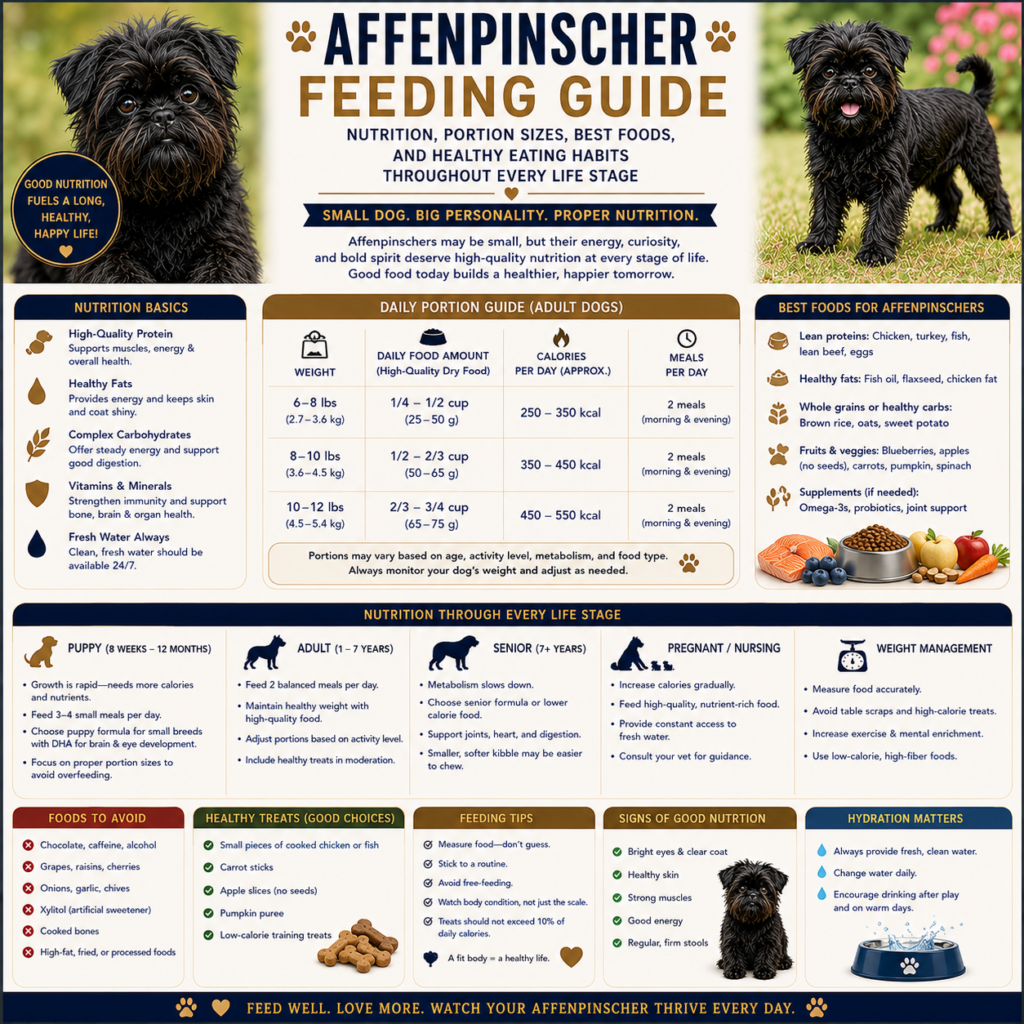
The Affenpinscher may be small in stature, but its nutritional needs are every bit as important as those of much larger breeds. A balanced diet supports healthy growth during puppyhood, maintains energy throughout adulthood, strengthens the immune system, protects joints, promotes healthy skin and coat, and contributes to a long, active life.
Because the Affenpinscher is an energetic toy breed with a relatively fast metabolism, choosing the right food—and feeding the correct amount—is essential. Both overfeeding and underfeeding can have long-term health consequences. Excess body weight places unnecessary strain on the joints and heart, while inadequate nutrition may lead to poor muscle development, reduced immunity, and lower energy levels.
This comprehensive guide explains everything owners should know about feeding an Affenpinscher, from puppyhood through the senior years, helping ensure that every meal supports lifelong health.
Why Nutrition Matters
Every organ in an Affenpinscher’s body depends on proper nutrition.
A complete and balanced diet provides the nutrients necessary for:
- Healthy muscle development
- Strong bones and joints
- Healthy skin
- A shiny coat
- Brain function
- Digestive health
- Immune support
- Energy production
Good nutrition also helps reduce the risk of obesity, one of the most preventable health problems affecting small companion dogs.
Understanding the Affenpinscher’s Metabolism
Although they weigh only a few kilograms, Affenpinschers are lively, curious, and surprisingly active.
Their metabolism is generally faster than that of larger breeds, meaning they require nutrient-dense meals rather than simply larger quantities of food.
Young puppies, in particular, use energy rapidly as they grow, making regular feeding schedules especially important.
Choosing High-Quality Dog Food
Selecting a quality commercial dog food is one of the simplest ways to meet an Affenpinscher’s nutritional needs.
Look for foods that list a named animal protein as the first ingredient, such as:
- Chicken
- Turkey
- Lamb
- Beef
- Salmon
- Duck
Balanced foods should also contain:
Healthy Proteins
Support muscle maintenance and tissue repair.
Healthy Fats
Provide concentrated energy while supporting brain development and skin health.
Complex Carbohydrates
Supply steady energy throughout the day.
Vitamins and Minerals
Support immune function, healthy bones, and normal body processes.
Fiber
Helps maintain healthy digestion and regular bowel movements.
Feeding an Affenpinscher Puppy
The first year of life is a period of rapid growth.
Puppies require specially formulated small-breed puppy food that provides higher levels of protein, calories, calcium, phosphorus, and essential nutrients.
Typical feeding schedules include:
Eight to Twelve Weeks
Four small meals each day.
Three to Six Months
Three meals each day.
Six to Twelve Months
Gradually transition to two meals daily.
Maintaining consistent feeding times helps establish healthy routines while supporting digestive health.
Feeding an Adult Affenpinscher
Most healthy adult Affenpinschers thrive on two balanced meals each day.
Splitting the daily food allowance into morning and evening meals helps maintain consistent energy levels while preventing excessive hunger.
Factors influencing portion sizes include:
- Age
- Body weight
- Activity level
- Overall health
- Type of food
- Individual metabolism
Always use the feeding recommendations provided by the food manufacturer as a starting point, then adjust according to your veterinarian’s advice and your dog’s body condition.
Feeding Senior Dogs
As Affenpinschers grow older, their nutritional requirements gradually change.
Many senior dogs become less active and therefore require fewer calories to maintain a healthy weight.
Senior diets often include:
- Controlled calorie levels
- Easily digestible proteins
- Joint-supporting nutrients
- Added antioxidants
- Moderate fat levels
- Increased fiber
Regular veterinary examinations help determine when dietary adjustments become appropriate.
Portion Control
Because the Affenpinscher is so small, even modest overfeeding can quickly lead to weight gain.
Owners should:
- Measure every meal.
- Avoid estimating portions.
- Use a proper measuring cup.
- Follow consistent feeding times.
- Monitor body condition monthly.
If your dog begins gaining weight, consult your veterinarian before making major dietary changes.
Healthy Treats
Treats are valuable training tools but should never replace balanced meals.
Ideally, treats should account for no more than approximately ten percent of your dog’s total daily calorie intake.
Healthy treat options include:
Small Commercial Training Treats
Choose treats made specifically for small dogs.
Cooked Lean Chicken
Plain, unseasoned chicken is highly rewarding during training.
Carrot Pieces
Many dogs enjoy crunchy vegetables.
Green Beans
Low in calories and high in fiber.
Apple Slices
Offer in moderation after removing seeds and core.
Always introduce new foods gradually to monitor for digestive upset.
Foods That Should Never Be Given
Certain foods are toxic or potentially dangerous for dogs.
Never intentionally feed an Affenpinscher:
- Chocolate
- Grapes
- Raisins
- Onions
- Garlic
- Macadamia nuts
- Xylitol
- Alcohol
- Caffeine
- Cooked bones
If accidental ingestion occurs, contact a veterinarian immediately.
Hydration Is Just as Important
Water is every bit as important as food.
Fresh, clean drinking water should be available at all times.
Owners should pay particular attention during:
- Hot weather
- Increased physical activity
- Travel
- Illness
- Recovery after exercise
Reduced water intake or excessive drinking may indicate an underlying health problem requiring veterinary evaluation.
Managing Food Allergies and Sensitivities
Although not especially common in the breed, some Affenpinschers develop food sensitivities.
Possible signs include:
- Persistent itching
- Ear infections
- Digestive upset
- Excessive licking
- Chronic diarrhea
- Poor coat quality
Your veterinarian may recommend an elimination diet or specialized nutrition plan to identify problem ingredients safely.
Supporting Dental Health Through Nutrition
Because toy breeds commonly develop dental disease, nutrition plays an important supporting role.
Daily tooth brushing remains the most effective preventive measure, but appropriate chewing activities may also help reduce plaque accumulation.
Choose dental chews recommended by your veterinarian and avoid products that are excessively hard, as these may fracture teeth.
Monitoring Body Condition
The number displayed on a scale tells only part of the story.
Owners should regularly evaluate body condition by observing:
Waistline
Viewed from above, the waist should be visible behind the ribs.
Abdominal Tuck
Viewed from the side, the abdomen should slope gently upward.
Rib Coverage
Ribs should be easily felt beneath a thin layer of fat without being highly visible.
Maintaining ideal body condition helps reduce the risk of joint disease, heart problems, and diabetes.
Feeding During Illness or Recovery
Dogs recovering from surgery or illness may temporarily require different nutritional support.
Veterinarians may recommend:
- Smaller, more frequent meals
- Easily digestible diets
- Increased hydration
- Prescription therapeutic foods
- Temporary appetite stimulants when appropriate
Never introduce supplements or major dietary changes without professional guidance.
Common Feeding Mistakes
Many nutritional problems result from simple everyday habits.
Common mistakes include:
- Feeding excessive table scraps.
- Leaving food available all day.
- Offering too many treats.
- Switching foods too quickly.
- Ignoring gradual weight gain.
- Feeding foods intended for much larger breeds.
Consistency is one of the most valuable habits owners can develop.
Final Thoughts
Proper nutrition is one of the greatest gifts an owner can provide an Affenpinscher. Every balanced meal contributes to healthy growth, strong muscles, a shiny coat, efficient digestion, and long-term wellbeing. While genetics influence overall health, daily feeding habits play an equally important role in determining how energetic, comfortable, and active a dog remains throughout its life.
By choosing high-quality food, measuring portions carefully, maintaining regular feeding routines, and monitoring body condition, owners can help their Affenpinscher enjoy many healthy years. Combined with regular exercise, preventive veterinary care, and plenty of love, excellent nutrition forms the foundation of a long, happy, and fulfilling life.
—
The End
PawBearing.com
 Discover More From Our Family of Websites
 ZodiacBearing (Astrology, Tarot, Numerology, Angel Numbers & Spiritual Guidance)
 Velourana (Beauty, Makeup, Hair Care, Skincare & Beauty Tips)
 HavenBearing (Home, Living, Organization, Décor & Everyday Inspiration)
 PawBearing (Pet Care, Dog Breeds, Animal Health, Training & Pet Products)
 PsyCatherine (Notes From the Journal of a Psychologist on Real Life)