CATEGORY: Affenpinscher
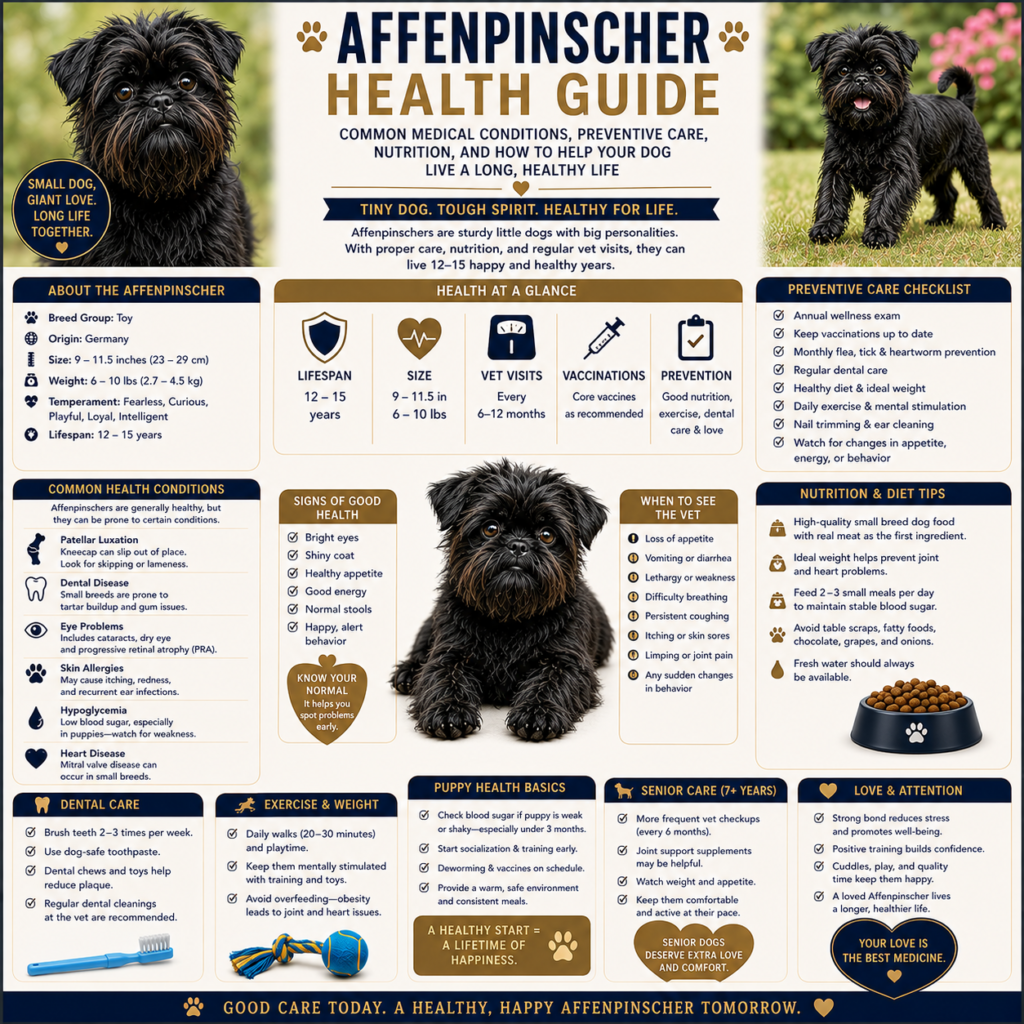
The Affenpinscher is widely regarded as one of the healthiest toy dog breeds. With proper care, responsible breeding, a nutritious diet, regular exercise, and preventive veterinary medicine, many Affenpinschers enjoy long, active lives well into their teenage years. While no breed is completely free from health concerns, understanding the medical conditions that may affect an Affenpinscher allows owners to recognize early warning signs and seek treatment before minor issues become serious problems.
A healthy dog is the result of much more than good genetics. Daily habits such as maintaining a healthy weight, practicing excellent dental care, providing mental stimulation, scheduling routine veterinary visits, and feeding a balanced diet all contribute significantly to overall wellbeing.
This comprehensive guide explores the most common health concerns affecting the Affenpinscher while providing practical advice to help owners maximize both lifespan and quality of life.
General Health and Life Expectancy
The Affenpinscher is considered a relatively robust breed, particularly when compared with many other toy dogs.
Most healthy individuals live between 12 and 15 years, although it is not uncommon for well-cared-for Affenpinschers to reach 16 years of age or even older.
Several factors influence longevity, including:
- Genetics
- Nutrition
- Exercise
- Weight management
- Preventive healthcare
- Dental hygiene
- Mental wellbeing
- Living environment
While owners cannot control genetics, nearly every other factor can be positively influenced through responsible daily care.
Why Preventive Care Matters
Preventive healthcare is always easier, less expensive, and less stressful than treating advanced illness.
Routine veterinary examinations help identify developing problems before noticeable symptoms appear.
A typical preventive healthcare schedule includes:
Annual Wellness Examinations
A complete physical examination allows the veterinarian to assess your dog’s overall condition.
Vaccinations
Keeping vaccinations current protects against several serious infectious diseases.
Parasite Prevention
Regular protection against fleas, ticks, heartworms, and intestinal parasites helps maintain long-term health.
Dental Evaluations
Early treatment prevents painful oral disease.
Blood Testing
As Affenpinschers grow older, routine blood work can detect changes in organ function before symptoms develop.
Patellar Luxation
One of the most frequently discussed orthopedic conditions in small dog breeds is patellar luxation.
This condition occurs when the kneecap slips out of its normal position.
Symptoms may include:
- Occasional skipping while walking
- Brief hopping on one leg
- Sudden lifting of a rear leg
- Mild lameness
- Difficulty jumping
Mild cases often require only monitoring, while more severe cases may benefit from surgical correction.
Maintaining a healthy body weight significantly reduces stress on the joints.
Hip Problems
Although hip dysplasia is more commonly associated with large breeds, it can occasionally occur in Affenpinschers.
Affected dogs may experience:
- Stiffness
- Reduced activity
- Difficulty climbing stairs
- Reluctance to jump
- Limping after exercise
Responsible breeders screen breeding dogs whenever possible to reduce the risk of inherited orthopedic disease.
Regular exercise helps maintain muscle strength, which supports healthy joints.
Legg-Calvé-Perthes Disease
This orthopedic condition occasionally affects small breeds, including the Affenpinscher.
It develops when blood supply to the head of the femur becomes disrupted, leading to deterioration of the hip joint.
Signs usually appear in young dogs and include:
- Progressive limping
- Pain around the hip
- Muscle loss in one hind leg
- Reduced willingness to exercise
Early diagnosis generally leads to better treatment outcomes.
Eye Disorders
The Affenpinscher’s expressive eyes are one of its most attractive features, making routine eye care particularly important.
Potential eye conditions include:
Cataracts
Clouding of the eye lens that may gradually reduce vision.
Corneal Injuries
Their curious nature occasionally leads to scratches or irritation.
Progressive Vision Changes
Some age-related eye disorders develop slowly over many years.
Owners should contact a veterinarian if they notice:
- Excessive tearing
- Redness
- Squinting
- Cloudiness
- Frequent rubbing of the eyes
Dental Disease
Dental disease is one of the most common health issues affecting toy breeds.
Because Affenpinschers have relatively small mouths, plaque and tartar can accumulate quickly if regular dental care is neglected.
Untreated dental disease may lead to:
- Bad breath
- Inflamed gums
- Tooth loss
- Pain while eating
- Infection
- Damage to internal organs through circulating bacteria
Daily tooth brushing remains the single most effective preventive measure.
Professional dental cleaning may also be recommended periodically by your veterinarian.
Heart Health
While the Affenpinscher is not considered especially prone to severe heart disease, heart conditions can develop as dogs age.
Routine veterinary examinations allow heart murmurs or rhythm abnormalities to be detected early.
Owners should seek veterinary advice if their dog develops:
- Persistent coughing
- Exercise intolerance
- Difficulty breathing
- Fainting episodes
- Unusual fatigue
Early diagnosis often allows treatment that improves both lifespan and quality of life.
Obesity: A Preventable Health Risk
One of the most avoidable threats to an Affenpinscher’s health is obesity.
Because the breed is naturally small, even modest weight gain places additional strain on:
- Joints
- Heart
- Lungs
- Spine
- Knees
Obesity also increases the likelihood of diabetes and reduces overall mobility.
Owners should:
- Measure food accurately.
- Limit treats.
- Encourage daily exercise.
- Monitor body condition regularly.
- Consult veterinarians before beginning weight-loss programs.
Nutrition for Lifelong Health
A balanced diet supports every aspect of an Affenpinscher’s wellbeing.
High-quality commercial foods formulated for small breeds usually provide appropriate nutrition.
Healthy diets should include:
Quality Protein
Supports muscle maintenance and tissue repair.
Healthy Fats
Promote skin health and a shiny coat.
Vitamins and Minerals
Support immune function and healthy development.
Controlled Calories
Help prevent excessive weight gain.
Fresh water should always be available throughout the day.
Exercise and Physical Fitness
Although the Affenpinscher does not require intense exercise, regular activity remains essential.
Daily exercise helps maintain:
- Healthy muscles
- Flexible joints
- Healthy body weight
- Cardiovascular fitness
- Emotional wellbeing
Excellent activities include:
- Daily walks
- Indoor games
- Puzzle toys
- Basic obedience training
- Gentle play sessions
Avoid prolonged exercise during extremely hot weather because small breeds can overheat more quickly.
Caring for Senior Affenpinschers
As Affenpinschers enter their senior years, their healthcare needs gradually change.
Older dogs benefit from:
- More frequent veterinary examinations
- Joint health monitoring
- Blood pressure checks
- Blood testing
- Vision assessments
- Hearing evaluations
- Weight monitoring
Owners may also notice slightly reduced activity levels, increased sleeping, or slower movement.
Providing orthopedic bedding and maintaining gentle daily exercise can help keep senior dogs comfortable.
Warning Signs That Should Never Be Ignored
Prompt veterinary attention is recommended if your Affenpinscher experiences:
- Difficulty breathing
- Sudden collapse
- Repeated vomiting
- Persistent diarrhea
- Refusal to eat
- Severe limping
- Bloody urine
- Seizures
- Extreme lethargy
- Major behavioral changes
Early intervention often leads to faster recovery and better long-term outcomes.
Supporting Emotional Wellbeing
Health is not limited to the body alone.
The Affenpinscher thrives on companionship, mental stimulation, and positive daily interaction.
Owners can support emotional health by:
- Maintaining predictable routines.
- Providing interactive toys.
- Teaching new tricks.
- Offering regular exercise.
- Spending quality time together.
- Avoiding long periods of isolation.
A mentally fulfilled dog is often healthier physically as well.
Final Thoughts
The Affenpinscher is a remarkably hardy and long-lived breed when given the care it deserves. Although certain inherited conditions may occur, responsible breeding, routine veterinary care, balanced nutrition, regular exercise, and attentive daily observation greatly reduce many health risks.
Perhaps the greatest advantage owners have is prevention. Small habits practiced consistently—such as brushing teeth, maintaining an ideal weight, scheduling annual health checks, and providing daily enrichment—can add both years to an Affenpinscher’s life and life to its years. By investing in preventive care and understanding the breed’s unique health needs, owners can enjoy many happy, active years with this courageous little companion.
—
The End
PawBearing.com
 Discover More From Our Family of Websites
 ZodiacBearing (Astrology, Tarot, Numerology, Angel Numbers & Spiritual Guidance)
 Velourana (Beauty, Makeup, Hair Care, Skincare & Beauty Tips)
 HavenBearing (Home, Living, Organization, Décor & Everyday Inspiration)
 PawBearing (Pet Care, Dog Breeds, Animal Health, Training & Pet Products)
 PsyCatherine (Notes From the Journal of a Psychologist on Real Life)