CATEGORY: Affenpinscher
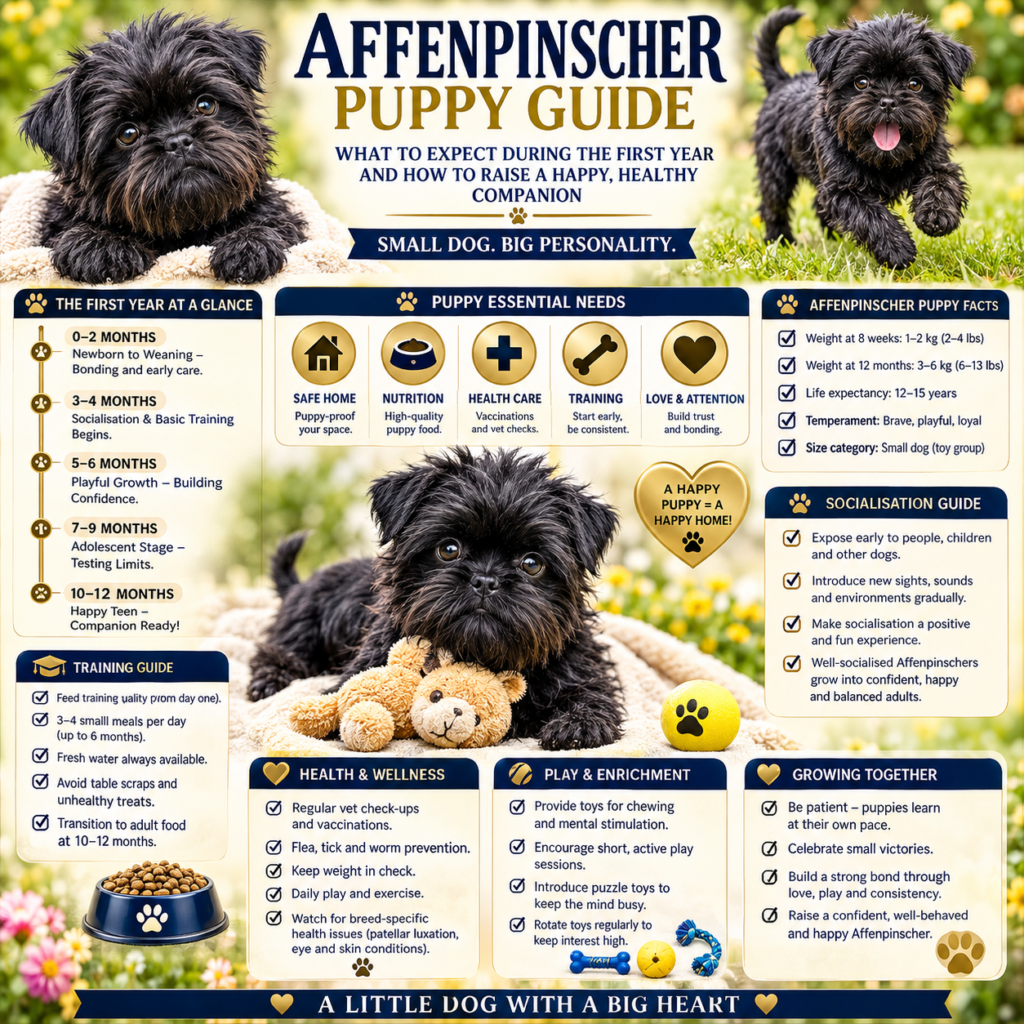
Bringing home an Affenpinscher puppy is an exciting experience that marks the beginning of a rewarding lifelong friendship. These tiny dogs may fit comfortably in your arms, but they possess enormous personalities, remarkable intelligence, and endless curiosity. The first year of an Affenpinscher’s life is one of rapid physical growth, emotional development, and learning. Every experience during this period helps shape the confident, affectionate, and entertaining adult dog they are known to become.
Unlike some toy breeds that mature quietly, the Affenpinscher is an active participant in everything happening around it. Puppies are constantly exploring, observing, testing boundaries, and learning how to interact with people, other animals, and the world around them. Understanding what to expect during each stage of development allows owners to provide the guidance, structure, and care their puppy needs.
This complete guide explains how to prepare for an Affenpinscher puppy, what changes to expect during the first twelve months, and how to help your new companion grow into a healthy, well-behaved adult.
Preparing Before Your Puppy Comes Home
Before your Affenpinscher arrives, your home should be prepared to provide both safety and comfort.
Because these puppies are extremely small and naturally curious, they can easily squeeze into tight spaces or investigate potentially dangerous household items. Puppy-proofing your home is one of the first responsibilities of every new owner.
Common preparations include:
- Removing electrical cords from reach.
- Storing cleaning products safely.
- Blocking narrow gaps behind furniture.
- Securing stairways if necessary.
- Removing poisonous plants.
- Keeping shoes and small objects off the floor.
- Providing a quiet sleeping area.
- Purchasing food and water bowls suitable for toy breeds.
A comfortable crate, quality puppy bed, chew toys, grooming tools, and an identification tag should also be ready before your puppy arrives.
The First Few Days
The first few days are often overwhelming for an Affenpinscher puppy.
Everything is unfamiliar, including new people, sounds, smells, and routines. It is completely normal for puppies to appear shy, cautious, or slightly nervous at first.
Owners should allow their puppy to explore gradually while maintaining a calm environment.
Avoid introducing too many visitors during the first week. Instead, focus on helping your puppy develop trust through gentle interaction, regular feeding times, and consistent routines.
Patience during these early days creates a strong emotional foundation that benefits the dog throughout its life.
Understanding Puppy Development
An Affenpinscher puppy changes dramatically during its first year.
Each developmental stage presents unique opportunities for learning.
Eight to Twelve Weeks
This period is filled with curiosity.
Puppies begin exploring their surroundings, learning their names, recognizing family members, and developing confidence.
Gentle handling and positive experiences are especially important.
Three to Six Months
Energy levels increase significantly.
Puppies become more adventurous and may begin testing household rules.
Training should become a daily routine while remaining fun and rewarding.
Six to Nine Months
Adolescence begins.
Many puppies experience increased independence and occasional stubbornness.
Consistency from owners becomes especially important during this stage.
Nine to Twelve Months
Most Affenpinschers begin developing into emotionally mature young adults.
Although they remain playful, they gradually become more focused during training and daily routines.
Socialization Is Essential
One of the most valuable gifts an owner can provide is early socialization.
Socialization teaches puppies that new experiences are normal rather than frightening.
Proper exposure includes:
Meeting New People
Introduce calm adults wearing different clothing, hats, and glasses.
Friendly Dogs
Arrange safe interactions with healthy, vaccinated dogs.
Different Environments
Visit parks, sidewalks, pet-friendly stores, and quiet public areas.
Everyday Sounds
Allow puppies to hear vacuum cleaners, traffic, doorbells, televisions, and household appliances.
Positive experiences during puppyhood significantly reduce anxiety later in life.
House Training Your Affenpinscher
House training requires patience, consistency, and realistic expectations.
Toy breeds often develop bladder control slightly later than larger dogs simply because of their small size.
Successful potty training depends on routine.
Take your puppy outside:
- Immediately after waking.
- After every meal.
- After drinking water.
- Following play sessions.
- Before bedtime.
Reward successful bathroom trips immediately with praise or treats.
Avoid punishment for accidents, as it may create fear rather than understanding.
Teaching Basic Obedience
Although tiny, Affenpinschers benefit enormously from structured training.
Early obedience provides safety while strengthening communication between owner and dog.
Begin with simple commands such as:
- Sit
- Come
- Stay
- Down
- Leave It
- Drop It
- Wait
Training sessions should remain short—typically five to ten minutes—because young puppies have limited attention spans.
Frequent, enjoyable lessons are more effective than occasional lengthy sessions.
Managing Puppy Biting
Like all puppies, Affenpinschers explore the world with their mouths.
Nipping and chewing are normal developmental behaviors.
Owners can manage this phase by:
- Offering appropriate chew toys.
- Redirecting biting away from hands.
- Ending play briefly if biting becomes too rough.
- Praising gentle behavior.
- Rotating toys to maintain interest.
Consistency helps puppies learn acceptable ways to interact.
Feeding During the First Year
Proper nutrition supports healthy growth.
Affenpinscher puppies require food specifically formulated for small-breed puppies because these diets contain appropriate levels of protein, calories, vitamins, and minerals.
Most young puppies eat three to four meals daily before gradually transitioning to two meals as they mature.
Fresh water should always be available.
Avoid overfeeding, as excess weight places unnecessary stress on developing joints.
Grooming from an Early Age
Introducing grooming during puppyhood creates lifelong cooperation.
Although young puppies require minimal trimming, regular handling teaches them that grooming is a normal part of life.
Practice:
Gentle Brushing
Use a soft brush several times each week.
Touching Paws
Prepare puppies for future nail trimming.
Looking Inside Ears
Create positive associations with ear examinations.
Tooth Brushing
Daily dental care should begin as early as possible.
Reward calm behavior throughout every grooming session.
Veterinary Care and Vaccinations
Routine veterinary visits are essential during the first year.
Your veterinarian will establish an appropriate schedule for:
- Vaccinations.
- Deworming.
- Parasite prevention.
- Growth monitoring.
- Nutritional guidance.
- Dental assessments.
These appointments also help puppies become comfortable with veterinary handling, reducing stress during future visits.
Exercise Without Overdoing It
Although energetic, young puppies should not be overexercised.
Their bones and joints are still developing.
Instead of long walks, provide:
- Short play sessions.
- Gentle exploration.
- Interactive toys.
- Basic training.
- Supervised outdoor time.
As your puppy grows, activity levels can gradually increase.
Building Confidence
Confidence develops through positive experiences rather than forced exposure.
Encourage your puppy to investigate new environments while allowing it to proceed at its own pace.
Celebrate curiosity.
Avoid carrying your puppy everywhere, as independent exploration helps build emotional resilience.
A confident Affenpinscher is generally happier, more adaptable, and easier to train.
Common Challenges During Puppyhood
Every puppy presents occasional challenges.
Owners may encounter:
- Chewing household items.
- Barking at unfamiliar sounds.
- Testing household rules.
- Separation anxiety.
- Digging through blankets or cushions.
- Selective listening during adolescence.
These behaviors are usually temporary when addressed with patience, consistency, and positive reinforcement.
Preparing for Adulthood
By the end of the first year, most Affenpinschers have developed the personality traits that make the breed so beloved.
They become confident companions with strong family bonds, impressive intelligence, and an entertaining sense of humor.
The time invested in training, socialization, nutrition, and healthcare during puppyhood pays lifelong dividends.
A well-raised Affenpinscher grows into a dog that is affectionate without being overly demanding, alert without excessive nervousness, and playful without becoming difficult to manage.
Final Thoughts
The first year with an Affenpinscher puppy is filled with unforgettable moments, rapid learning, and countless opportunities to build a lifelong partnership. While raising any puppy requires commitment, the rewards are especially meaningful with a breed as unique and charismatic as the Affenpinscher.
By providing consistent training, early socialization, proper healthcare, balanced nutrition, and plenty of love, owners lay the foundation for a confident, healthy, and happy companion. The mischievous little puppy that first arrives at your home soon grows into a devoted friend whose courage, intelligence, and cheerful personality will enrich your life for many years to come.
—
The End
PawBearing.com
 Discover More From Our Family of Websites
 ZodiacBearing (Astrology, Tarot, Numerology, Angel Numbers & Spiritual Guidance)
 Velourana (Beauty, Makeup, Hair Care, Skincare & Beauty Tips)
 HavenBearing (Home, Living, Organization, Décor & Everyday Inspiration)
 PawBearing (Pet Care, Dog Breeds, Animal Health, Training & Pet Products)
 PsyCatherine (Notes From the Journal of a Psychologist on Real Life)