CATEGORY: Alternative names
Few animals inspire as much affection as puppies. Their playful curiosity, boundless energy, and eager personalities have made them beloved companions across every continent. Although the English word puppy is recognised almost everywhere today, it is only one of many names used to describe young dogs.
Throughout history, different cultures have developed their own words for puppies. Some languages use completely different terms, while others simply adapt the adult word for dog by adding a suffix that indicates youth or small size. Literature, regional dialects, farming communities, and even children’s stories have also introduced affectionate nicknames that continue to be used today.
Learning these alternative names is more than an exercise in vocabulary. It offers a fascinating glimpse into language, culture, and the long relationship between humans and dogs. It also helps explain why different books, films, veterinary texts, and international conversations may refer to young dogs using unfamiliar terms.
Whether you are interested in languages, considering names for a new puppy, or simply curious about how people around the world describe these young companions, exploring the many alternative puppy names reveals just how universal the love of dogs has become.
What Exactly Is a Puppy?
Before looking at different names, it is worth defining the word itself.
A puppy is a young domestic dog that has not yet reached adulthood.
Although different organisations define developmental stages slightly differently, the word generally refers to dogs from birth through their early months of growth before they become mature adults.
During this period, puppies experience rapid physical development while learning social behaviour, communication, basic training, and their relationship with humans.
The word therefore describes age rather than breed.
Every recognised dog breed begins life as a puppy.
Pup – The Most Common Short Form
Perhaps the best-known alternative to puppy is simply pup.
The word is short, friendly, and widely used throughout the English-speaking world.
Many people use puppy and pup interchangeably without any difference in meaning.
Dog owners frequently say:
“Our pup loves playing in the garden.”
“The new pup is learning to sit.”
Veterinarians, trainers, breeders, and animal welfare organisations also use the word naturally.
Because of its simplicity, pup has become almost as common as puppy itself.
Whelp – The Traditional Breeding Term
The word whelp has existed in English for centuries.
Today it appears mainly in breeding and veterinary contexts.
When breeders say a female dog has “whelped,” they mean she has given birth.
The newborn puppies themselves may also be described as whelps during the earliest stage of life.
Although modern pet owners rarely use the word in everyday conversation, it remains an important technical term within professional breeding and canine reproduction.
Understanding it can be helpful when reading older books or specialised breeding literature.
Puppy Names in European Languages
Across Europe, nearly every language has developed its own word for a young dog.
Some examples include:
- English – Puppy
- French – Chiot
- German – Welpe
- Spanish – Cachorro
- Italian – Cucciolo
- Portuguese – Cachorro
- Dutch – Puppy or Pup
- Polish – Szczeniak
- Czech – Štěně
- Romanian – Cățel
Although pronunciation differs considerably, each word reflects the same idea—a young domestic dog beginning its life.
Many European pet owners today also recognise the English word puppy because of films, books, and international media.
Puppy Names Across Asia
Asia contains extraordinary linguistic diversity, and naturally there are many different words describing puppies.
In Japanese, a puppy is commonly called Koinu, literally meaning “small dog.”
Mandarin Chinese commonly uses Xiǎogǒu, meaning “little dog.”
Korean speakers often say Gangaji, a widely recognised word referring to puppies and small pet dogs.
Across India, Southeast Asia, and the Middle East, additional terms exist reflecting local languages and traditions.
Despite their differences, these names often follow a similar pattern by combining the ordinary word for dog with a description meaning young, little, or small.
Literary and Affectionate Puppy Nicknames
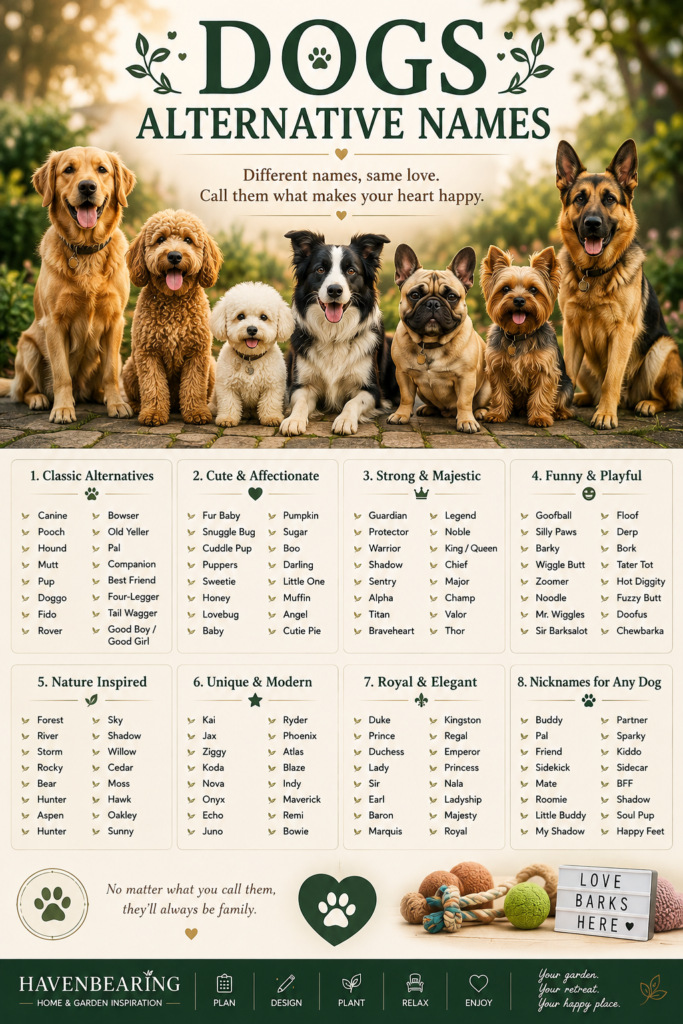
Beyond formal language, people naturally invent affectionate names for puppies.
Owners frequently use expressions such as:
Little one
Tiny paws
Furball
Fluffball
Baby dog
Little rascal
These are not official terms but expressions of affection that develop naturally within families.
Children often create especially imaginative names based on appearance, behaviour, or favourite stories.
Such nicknames rarely replace the puppy’s actual name, but they become part of everyday family life.
Regional Dialects and Historical Terms
Like many common animals, puppies have accumulated regional names over the centuries.
Older English dialects occasionally used local words that varied between counties and villages.
Some farming communities had specialised vocabulary connected with working dogs and breeding.
Many of these expressions gradually disappeared as modern English became more standardised, although they still appear in historical documents and literature.
Studying these older terms provides valuable insight into how closely dogs were connected with everyday rural life in previous centuries.
Scientific Terminology
Unlike affectionate nicknames, scientific writing tends to use highly precise language.
Veterinary medicine usually refers to:
Neonatal puppies
Juvenile dogs
Canine neonates
Pediatric canine patients
These technical expressions allow veterinarians and researchers to describe specific developmental stages accurately.
Outside professional settings, however, almost everyone simply says puppy or pup.
Why Puppy Vocabulary Matters
At first glance, learning different names for puppies may seem like little more than an interesting curiosity.
In reality, it offers several practical benefits.
Reading international books becomes easier.
Conversations with breeders and veterinarians become clearer.
Travellers recognise familiar ideas despite unfamiliar languages.
Dog lovers also gain greater appreciation for the remarkable cultural importance of puppies throughout history.
Every language has developed words expressing affection, care, and admiration for young dogs, reflecting humanity’s shared appreciation for these loyal companions.
Final Thoughts
Alternative names for puppies demonstrate how deeply dogs have become woven into cultures across the world. Whether someone says puppy, pup, whelp, chiot, welpe, cachorro, cucciolo, koinu, or countless other names, they are describing the same energetic stage of life that has delighted people for thousands of years. Each language adds its own character while celebrating the universal joy that puppies bring into homes and families.
Perhaps the most remarkable aspect of these different names is how similar their purpose remains despite linguistic differences. Every culture recognises the curiosity, innocence, and playful nature of young dogs, and every language has developed words that express affection for them. Although vocabulary changes from country to country, the excitement of welcoming a new puppy into a family is something people everywhere continue to understand.
The End
PawBearing
 Discover More From Our Family of Websites
 ZodiacBearing (Astrology, Tarot, Numerology, Angel Numbers & Spiritual Guidance)
 Velourana (Beauty, Makeup, Hair Care, Skincare & Beauty Tips)
 HavenBearing (Home, Living, Organization, Décor & Everyday Inspiration)
 PawBearing (Pet Care, Dog Breeds, Animal Health, Training & Pet Products)
 PsyCatherine (Notes From the Journal of a Psychologist on Real Life)