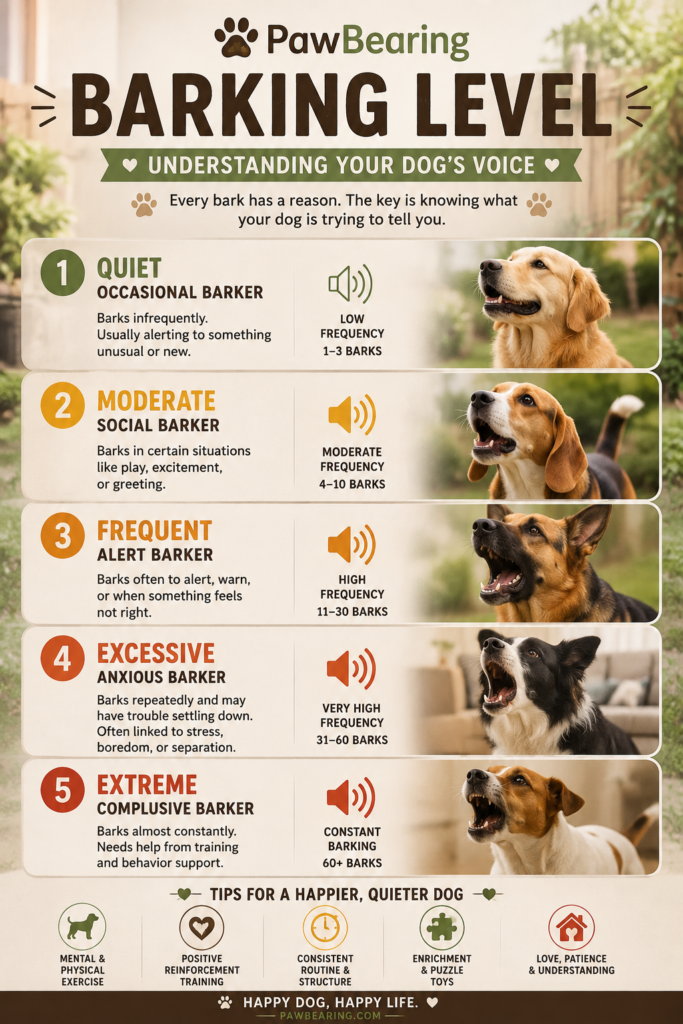
CATEGORY: Barking Level
Choosing a dog for apartment living involves much more than selecting a small breed. One of the most common misconceptions among first-time owners is that size determines whether a dog is suitable for an apartment. In reality, barking level, energy requirements, temperament, adaptability, and daily exercise often have a much greater impact on successful apartment living than height or weight.
Many large breeds are surprisingly quiet and relaxed indoors, while some very small dogs are naturally alert and vocal. A tiny dog that barks every time someone walks down the hallway may create far more challenges than a calm giant breed that spends most of the day sleeping peacefully beside its owner.
Living in close proximity to neighbours means barking becomes an important consideration. Thin apartment walls, shared corridors, elevators, delivery drivers, nearby dogs, and constant outside activity expose dogs to many potential triggers throughout the day. A breed that naturally reacts to every sound may require considerably more training and management than one with a naturally calm disposition.
Fortunately, apartment living does not automatically exclude dog ownership. With thoughtful breed selection, proper training, sufficient exercise, and realistic expectations, many dogs thrive in apartments and form wonderful lifelong companions. Understanding how barking influences apartment life helps owners make informed decisions before bringing a new dog home.
Why Barking Matters More in Apartments
In detached homes, occasional barking may go largely unnoticed.
Apartment living is different.
Neighbours often live directly above, below, or beside one another.
Hallways amplify sound.
Shared entrances generate regular foot traffic.
Lifts open and close throughout the day.
Visitors, cleaners, deliveries, and maintenance workers constantly move through common areas.
For naturally vocal dogs, these everyday events can become repeated triggers.
What begins as harmless alert barking may quickly become a source of tension if it continues throughout the day.
Small Dogs Are Not Always Quiet
Many people automatically assume that smaller dogs make better apartment companions.
While small size certainly makes indoor living easier in some respects, barking tendencies vary enormously between breeds.
Several small breeds were originally developed as watchdogs.
Their role was to alert owners immediately whenever they noticed unusual activity.
Because of this history, some toy and companion breeds naturally vocalise more frequently than many larger dogs.
Breed history often predicts barking behaviour far more accurately than body size alone.
Quiet Large Breeds Can Be Excellent Apartment Dogs
Some surprisingly large breeds adapt exceptionally well to apartment living.
This often surprises first-time owners.
Many calm breeds spend much of the day resting peacefully after receiving appropriate exercise.
Examples commonly recognised for relatively quiet indoor behaviour include:
- Greyhound.
- Great Dane.
- Whippet.
- Newfoundland.
Although these dogs require space for comfortable movement and daily walks, they are often less reactive to everyday apartment sounds than many smaller breeds.
Temperament frequently outweighs physical size when evaluating apartment suitability.
Understanding Common Apartment Barking Triggers
Apartment environments expose dogs to constant sensory stimulation.
Typical triggers include:
- Doors closing.
- Elevators.
- Passing neighbours.
- Children playing.
- Delivery drivers.
- Vacuum cleaners.
- Other barking dogs.
- Traffic noise.
A dog that reacts strongly to every unfamiliar sound may quickly become overstimulated.
Recognising these triggers helps owners develop effective management strategies before barking becomes habitual.
Exercise Reduces Unnecessary Barking
One of the biggest contributors to excessive barking is unmet physical and mental needs.
Apartment dogs depend almost entirely on their owners for daily activity.
Regular exercise may include:
- Walks.
- Play sessions.
- Puzzle toys.
- Scent games.
- Obedience training.
- Interactive feeding.
A mentally satisfied dog generally spends far more time relaxing indoors than searching for stimulation through barking.
Many behavioural problems decrease naturally once appropriate exercise routines become consistent.
Early Socialisation Makes a Difference
Apartment dogs encounter many unfamiliar people every day.
Without early socialisation, these experiences may create uncertainty or defensive barking.
Introducing puppies gradually to:
- Different people.
- Household noises.
- Traffic.
- Elevators.
- Public spaces.
- Friendly dogs.
helps build confidence during important developmental periods.
Confident dogs are generally less reactive because unfamiliar situations no longer seem threatening.
Teaching Quiet Behaviour
Owners often assume barking should simply stop on command.
In reality, effective training begins by teaching the dog when silence is rewarding.
Helpful techniques include:
Rewarding calm behaviour before barking begins.
Teaching a reliable “quiet” cue.
Redirecting attention toward another activity.
Remaining consistent.
Avoiding punishment-based methods.
Punishment may temporarily interrupt barking but often increases anxiety, leading to even more vocal behaviour later.
Positive reinforcement encourages lasting behavioural change while strengthening trust.
Creating a Comfortable Apartment Environment
Thoughtful home design can also reduce barking.
Simple adjustments include:
Closing curtains if outside movement constantly triggers barking.
Providing a comfortable resting area away from the front door.
Using white noise or soft background music.
Offering enrichment toys during quiet periods.
Maintaining predictable daily routines.
These changes reduce unnecessary stimulation while helping the dog feel secure within the home.
Choosing the Right Breed for Apartment Living
Before selecting any breed, ask yourself several important questions.
Can you provide daily walks regardless of weather?
Will the dog spend long hours alone?
Do neighbours live close by?
Do local building rules restrict pet noise?
How much training experience do you have?
Would you enjoy working with an intelligent, vocal breed?
Honest answers often narrow the choice considerably.
A naturally quieter breed may suit busy apartment life better than one requiring constant behavioural management.
Apartment Success Depends on the Owner Too
Breed characteristics certainly matter, but ownership plays an equally important role.
Even low barking breeds can develop unwanted habits if they become bored, anxious, or under-exercised.
Likewise, many naturally vocal breeds live successfully in apartments when owners provide:
- Consistent routines.
- Positive training.
- Daily enrichment.
- Adequate exercise.
- Patient guidance.
Responsible ownership often makes the greatest difference of all.
Dogs thrive when their physical, emotional, and social needs are understood and consistently met.
Final Thoughts
Apartment living presents unique challenges for both dogs and their owners, making barking level an important factor when choosing the right breed. However, barking should never be considered in isolation. Temperament, energy level, confidence, adaptability, exercise needs, and training all contribute to how successfully a dog adjusts to life in a shared building. A naturally calm breed with sufficient daily activity often proves far easier to manage than a smaller but highly reactive dog whose needs are not fully met.
The most successful apartment dogs are those whose natural personalities align with their environment and whose owners are committed to providing proper care, enrichment, and positive training. By understanding common barking triggers, selecting an appropriate breed, and establishing healthy daily routines, apartment owners can enjoy the companionship of a happy, well-balanced dog while maintaining peaceful relationships with neighbours and creating a comfortable home for everyone involved.
The End
PawBearing
 Discover More From Our Family of Websites
 ZodiacBearing (Astrology, Tarot, Numerology, Angel Numbers & Spiritual Guidance)
 Velourana (Beauty, Makeup, Hair Care, Skincare & Beauty Tips)
 HavenBearing (Home, Living, Organization, Décor & Everyday Inspiration)
 PawBearing (Pet Care, Dog Breeds, Animal Health, Training & Pet Products)
 PsyCatherine (Notes From the Journal of a Psychologist on Real Life)