CATEGORY: Goldfish
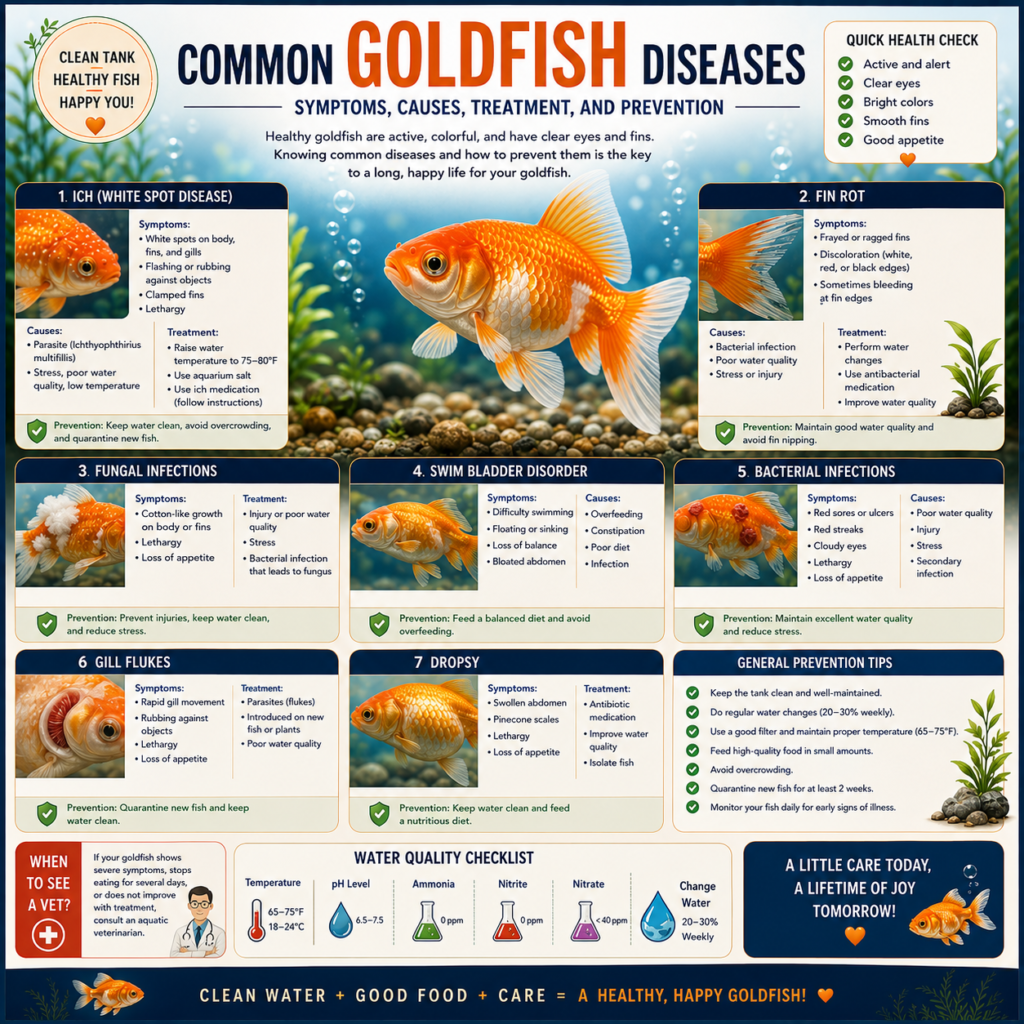
Keeping goldfish healthy begins with understanding the illnesses that can affect them. Although goldfish are generally hardy fish, poor water quality, stress, overcrowding, and improper nutrition can weaken their immune system and make them vulnerable to disease.
The good news is that many common goldfish illnesses are preventable, and those that do occur often respond well to early treatment. Learning to recognize the warning signs can make the difference between a quick recovery and a serious health problem.
This guide covers the most common diseases affecting goldfish, how to identify them, available treatment options, and the best ways to prevent illness in the first place.
—
Why Goldfish Become Sick
Disease is rarely caused by a single factor.
Most illnesses develop because of one or more underlying problems, including:
- Poor water quality
- High ammonia levels
- Nitrite poisoning
- Stress
- Sudden temperature changes
- Overcrowding
- Poor nutrition
- Parasites
- Bacterial infections
- Fungal infections
- Introducing infected fish without quarantine
Addressing these root causes is just as important as treating the disease itself.
—
Recognizing the First Warning Signs
Healthy goldfish are active, curious, and eager to eat.
Early signs of illness may include:
- Loss of appetite
- Hiding
- Lethargy
- Clamped fins
- Rapid breathing
- Swimming abnormally
- Flashing or rubbing against objects
- Pale coloration
- Isolating from other fish
Any sudden change in behavior deserves attention.
—
White Spot Disease (Ich)
Ich is one of the most common diseases seen in freshwater aquariums.
It is caused by the parasite Ichthyophthirius multifiliis.
Symptoms
- Tiny white spots resembling grains of salt
- Scratching against decorations
- Rapid gill movement
- Clamped fins
- Reduced appetite
Causes
The parasite is often introduced through:
- New fish
- Contaminated plants
- Shared equipment
Stress and poor water quality increase susceptibility.
Treatment
Typical treatment includes:
- Raising the water temperature gradually if appropriate for the aquarium inhabitants
- Using medications formulated for Ich
- Increasing aeration during treatment
- Completing the full treatment course even if symptoms disappear
—
Fin Rot
Fin rot is a bacterial infection that damages the fins.
Symptoms
- Ragged fins
- White fin edges
- Blackened fin tips
- Red streaks
- Progressive fin loss
Causes
Usually associated with:
- Poor water quality
- Injuries
- Stress
Treatment
Treatment may involve:
- Improving water quality
- Partial water changes
- Appropriate antibacterial medication
- Removing sharp decorations that may cause injuries
—
Swim Bladder Disorder
Swim bladder disorder affects buoyancy rather than being a single disease.
Symptoms
- Floating upside down
- Difficulty staying underwater
- Sinking to the bottom
- Swimming sideways
Possible Causes
- Constipation
- Overfeeding
- Infection
- Injury
- Congenital deformities
Fancy goldfish are especially prone to buoyancy problems because of their compact body shape.
Treatment
Depending on the cause:
- Fast the fish for a day or two if appropriate
- Feed cooked, peeled peas or other high-fiber foods
- Improve diet quality
- Check water parameters
- Seek veterinary advice if symptoms persist
—
Dropsy
Dropsy is a serious condition caused by internal organ failure or severe infection.
Symptoms
- Swollen abdomen
- Pinecone-like scales
- Lethargy
- Bulging eyes
- Loss of appetite
Causes
Dropsy is often linked to:
- Bacterial infections
- Kidney failure
- Advanced internal disease
Treatment
Prompt isolation and treatment may help, but recovery is often difficult once severe symptoms appear.
—
Fungal Infections
Fungal infections usually occur after injury or stress.
Symptoms
- Cotton-like white patches
- Slow movement
- Damaged skin
- Reduced appetite
Treatment
Treatment generally includes:
- Improving water quality
- Aquarium-safe antifungal medications
- Removing underlying causes of stress
—
Velvet Disease
Velvet is caused by microscopic parasites.
Symptoms
- Fine yellow or gold dusting on the body
- Clamped fins
- Rapid breathing
- Flashing
- Lethargy
Treatment
Early diagnosis improves outcomes.
Treatment usually includes appropriate antiparasitic medication and careful aquarium management.
—
Gill Flukes
Gill flukes are tiny parasites that attack the gills.
Symptoms
- Rapid breathing
- Gasping
- Rubbing against surfaces
- Hanging near the surface
- Inflamed gills
Treatment
Specific antiparasitic medications are generally required.
—
Skin Flukes
Closely related to gill flukes, skin flukes attack the body surface.
Symptoms
- Excess mucus
- Flashing
- Irritated skin
- Clamped fins
Prompt treatment usually produces good results.
—
Anchor Worm
Despite the name, anchor worms are crustacean parasites.
Symptoms
- Visible thread-like parasites
- Red sores
- Scratching
- Local swelling
Treatment often requires both parasite removal and medication.
—
Fish Lice
Fish lice are visible parasites that move across the fish’s body.
Symptoms
- Scratching
- Small round parasites
- Red irritation
- Reduced activity
Early treatment prevents further spread.
—
Ammonia Poisoning
Not every health problem is infectious.
Ammonia poisoning is one of the most common emergencies in new aquariums.
Symptoms
- Gasping
- Red gills
- Lethargy
- Sitting at the bottom
- Sudden deaths
Causes
- Uncycled aquariums
- Overfeeding
- Overstocking
- Filter failure
Treatment
Immediate action includes:
- Large partial water changes
- Testing water
- Reducing feeding
- Ensuring the biological filter is functioning properly
—
Nitrite Poisoning
Nitrite interferes with oxygen transport in the blood.
Symptoms
- Rapid breathing
- Brownish gills
- Weakness
- Hanging near filter outlets
Maintaining a fully cycled aquarium prevents this problem.
—
Nitrate Stress
Although less toxic than ammonia or nitrite, chronically high nitrate levels weaken the immune system.
Symptoms may include:
- Poor growth
- Increased disease
- Reduced appetite
- Dull coloration
Regular water changes help maintain healthy nitrate levels.
—
Constipation
Goldfish occasionally develop constipation, especially after overeating.
Symptoms
- Reduced appetite
- Swollen abdomen
- Floating difficulties
- Stringy waste
Providing fiber-rich foods and avoiding overfeeding usually resolves mild cases.
—
Mouth Fungus (Columnaris)
Despite its name, Columnaris is a bacterial disease.
Symptoms
- White patches around the mouth
- Skin ulcers
- Frayed fins
- Rapid progression
Prompt treatment is important because the disease can spread quickly.
—
Popeye
Popeye refers to swelling of one or both eyes.
Possible Causes
- Injury
- Infection
- Poor water quality
Treatment depends on identifying the underlying cause.
—
Ulcers
Ulcers appear as open sores on the body.
Possible causes include:
- Bacterial infections
- Injuries
- Parasites
Clean water and appropriate medication are often required.
—
Quarantine: Your Best Defense
Every new fish should ideally spend several weeks in a separate quarantine aquarium before joining the main tank.
Quarantine allows you to:
- Observe for illness
- Prevent disease outbreaks
- Treat problems before exposing other fish
This simple practice significantly reduces the risk of introducing parasites or infections.
—
Maintaining Excellent Water Quality
Most diseases become less likely when water conditions remain stable.
Key practices include:
- Weekly water changes
- Testing water regularly
- Avoiding overcrowding
- Using effective filtration
- Removing uneaten food
- Cleaning the substrate
Healthy water supports a healthy immune system.
—
Providing Proper Nutrition
A balanced diet strengthens natural disease resistance.
Offer:
- Premium goldfish pellets
- Vegetables
- Frozen foods
- Occasional live foods
- Gel foods
Avoid excessive feeding and poor-quality diets.
—
Reducing Stress
Stress weakens immunity and makes disease more likely.
Reduce stress by:
- Avoiding sudden environmental changes
- Providing adequate swimming space
- Housing compatible fish together
- Maintaining consistent water conditions
- Handling fish only when necessary
Calm fish are generally healthier fish.
—
When to Seek Veterinary Help
Some conditions require professional assistance.
Consider consulting a veterinarian experienced with aquatic animals if:
- Symptoms worsen despite treatment
- Multiple fish die unexpectedly
- Ulcers become severe
- Large swellings develop
- Fish stop eating for prolonged periods
- The diagnosis is uncertain
Early intervention often improves the chances of recovery.
—
Building a Disease Prevention Routine
Successful goldfish keepers focus on prevention rather than treatment.
A simple routine includes:
- Weekly water testing
- Partial water changes
- Observing fish during feeding
- Cleaning the substrate
- Maintaining filtration
- Feeding a varied diet
- Quarantining all new arrivals
Preventive care is far easier—and often less expensive—than treating disease after it appears.
—
Final Thoughts
Most goldfish diseases can be prevented through proper aquarium maintenance, excellent water quality, balanced nutrition, and careful observation. While illnesses such as Ich, fin rot, swim bladder disorders, and parasitic infections are relatively common, recognizing symptoms early greatly improves the chances of successful treatment.
By understanding the warning signs, maintaining a clean and stable environment, and responding promptly when problems arise, you can help your goldfish enjoy a healthy, active life that may span decades. Prevention, patience, and consistent care remain the most effective tools every goldfish owner can use.
The End,
PawBearing
 Discover More From Our Family of Websites
 ZodiacBearing (Astrology, Tarot, Numerology, Angel Numbers & Spiritual Guidance)
 Velourana (Beauty, Makeup, Hair Care, Skincare & Beauty Tips)
 HavenBearing (Home, Living, Organization, Décor & Everyday Inspiration)
 PawBearing (Pet Care, Dog Breeds, Animal Health, Training & Pet Products)
 PsyCatherine (Notes From the Journal of a Psychologist on Real Life)