CATEGORY: Goldfish
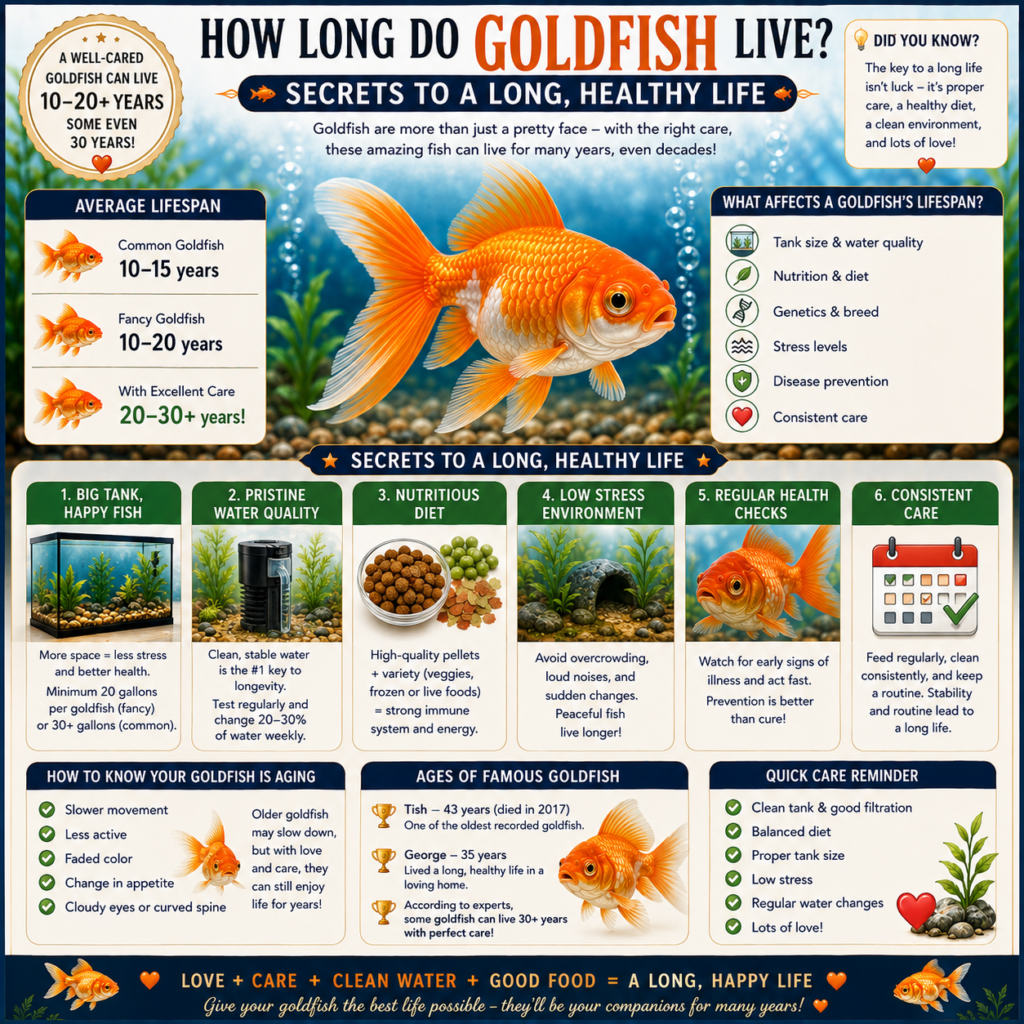
One of the most widespread myths about goldfish is that they only live for a few years. Many people believe these colorful fish naturally have short lifespans, especially if they were won at a fair or kept in a small bowl. In reality, goldfish are among the longest-lived aquarium fish when given proper care.
With the right environment, balanced nutrition, and consistent maintenance, goldfish can live for decades. Their longevity depends far more on the quality of care they receive than on luck or genetics alone.
This guide explores the true lifespan of goldfish, the factors that influence their longevity, common reasons for premature death, and practical steps you can take to help your goldfish enjoy a long, healthy life.
—
How Long Can Goldfish Live?
Goldfish have impressive life expectancies.
Typical lifespans are:
- Pet store goldfish with poor care: 2–5 years
- Well-maintained aquarium goldfish: 10–15 years
- Excellent care: 20 years or more
Some exceptionally well-cared-for goldfish have lived beyond 40 years, demonstrating the remarkable longevity this species is capable of achieving.
—
Why the Myth Exists
The belief that goldfish only live a few years stems from poor husbandry rather than biology.
Historically, many goldfish were kept in:
- Small bowls
- Unfiltered containers
- Crowded aquariums
- Poor water conditions
Under these circumstances, their lifespan is dramatically shortened.
When housed in spacious aquariums with proper filtration, goldfish reveal their true longevity.
—
Do Different Goldfish Varieties Live Different Lengths?
Although all goldfish belong to the same species (Carassius auratus), different varieties often have slightly different average lifespans.
Common Goldfish
Common goldfish are among the longest-lived varieties.
Average lifespan:
- 15–25 years
They are hardy and well suited to both large aquariums and outdoor ponds.
—
Comet Goldfish
Comets share similar longevity.
Many live:
- 15–20 years
- Occasionally longer
Their streamlined bodies contribute to excellent swimming ability and overall hardiness.
—
Shubunkin Goldfish
These colorful calico varieties often enjoy lifespans similar to common goldfish.
Typical lifespan:
- 15–20 years
—
Fancy Goldfish
Fancy varieties generally live slightly shorter lives due to their specialized body shapes.
Many reach:
- 10–15 years
With exceptional care, some fancy goldfish exceed 20 years.
—
Factors That Affect Lifespan
Several key factors determine how long a goldfish will live.
—
Aquarium Size
Space is one of the biggest influences on longevity.
Goldfish require far more room than many people expect.
Larger aquariums provide:
- Better swimming space
- More stable water chemistry
- Higher oxygen levels
- Lower stress
Crowded aquariums often lead to chronic health problems.
—
Water Quality
Poor water quality is the leading cause of premature death.
Maintain:
- Ammonia: 0 ppm
- Nitrite: 0 ppm
- Low nitrate levels
- Stable pH
Regular testing helps detect problems before they become dangerous.
—
Filtration
Goldfish produce substantial waste.
Efficient biological filtration removes harmful toxins and supports beneficial bacteria that keep the aquarium healthy.
Underpowered filters often struggle to maintain stable conditions.
—
Nutrition
A balanced diet supports:
- Healthy growth
- Strong immunity
- Proper digestion
- Vibrant coloration
Offer a varied menu including:
- Premium pellets
- Vegetables
- Frozen foods
- Gel foods
- Occasional live foods
Good nutrition contributes directly to longevity.
—
Water Changes
Routine maintenance prevents waste from accumulating.
Most aquariums benefit from:
- Weekly 25–40% water changes
Fresh, conditioned water keeps the environment stable.
—
Temperature Stability
Goldfish tolerate cool water well but dislike sudden temperature fluctuations.
Consistent temperatures reduce stress and support long-term health.
—
Stress
Chronic stress weakens the immune system.
Common causes include:
- Poor water quality
- Aggressive tank mates
- Frequent handling
- Loud vibrations
- Inadequate space
Reducing stress improves disease resistance.
—
Genetics
Some bloodlines naturally possess stronger health than others.
Purchasing goldfish from reputable breeders often increases the likelihood of obtaining vigorous, healthy fish.
—
Outdoor Pond vs Aquarium
Many common goldfish thrive exceptionally well in outdoor ponds.
Benefits include:
- Larger living space
- Natural sunlight
- Greater swimming distance
- Seasonal environmental changes
- Improved muscle development
Properly designed ponds often support longer lifespans than small indoor aquariums.
Fancy goldfish generally remain better suited to indoor aquariums.
—
Can Goldfish Keep Growing?
Yes.
Goldfish continue growing throughout life.
Growth slows as they mature but does not stop completely.
A spacious environment allows fish to reach their natural size rather than restricting healthy development.
—
Does a Small Bowl Keep Goldfish Small?
No.
A common misconception is that goldfish simply grow to fit their container.
In reality:
- Internal organs continue developing.
- Poor conditions stunt healthy growth.
- Chronic stress damages overall health.
- Lifespan is significantly reduced.
Providing adequate space promotes healthy development rather than excessive growth.
—
Common Reasons Goldfish Die Young
Many early deaths result from preventable mistakes.
Frequent causes include:
- Uncycled aquariums
- Ammonia poisoning
- Nitrite poisoning
- Poor filtration
- Overfeeding
- Underfeeding
- Small bowls
- Infrequent water changes
- Disease
- Sudden environmental changes
Understanding these risks helps prevent them.
—
Signs of a Healthy Goldfish
Healthy goldfish typically display:
- Bright coloration
- Smooth swimming
- Strong appetite
- Clear eyes
- Intact fins
- Curious behavior
Active fish are generally healthy fish.
—
Signs of Aging
As goldfish grow older, owners may notice:
- Slightly slower swimming
- Reduced activity
- Minor color changes
- Longer resting periods
These gradual changes are often normal.
However, sudden lethargy or loss of appetite should never be dismissed as simple old age.
—
Helping Goldfish Live Longer
Simple daily habits have a major impact.
Provide:
- A spacious aquarium
- Powerful filtration
- Stable water quality
- Balanced nutrition
- Regular maintenance
- Compatible tank mates
- Low-stress surroundings
Consistency is more important than occasional intensive care.
—
Mental Stimulation
Goldfish are intelligent fish.
Enrichment may include:
- Rearranging decorations occasionally
- Offering varied foods
- Providing plants
- Creating open swimming areas
Curious fish often remain active well into old age.
—
Avoiding Overfeeding
Excess food leads to:
- Obesity
- Digestive problems
- Poor water quality
- Increased disease risk
Feed moderate portions that can be consumed within a couple of minutes.
—
Quarantine New Fish
Introducing sick fish can threaten an entire aquarium.
Quarantining new arrivals for several weeks reduces the risk of:
- Parasites
- Bacterial infections
- Fungal diseases
Healthy aquariums begin with careful prevention.
—
Veterinary Care
Aquatic veterinarians can assist with:
- Persistent illness
- Internal infections
- Tumors
- Parasites
- Diagnostic testing
Professional advice becomes especially valuable for valuable or long-lived fish.
—
Fascinating Longevity Facts
- Goldfish can outlive many dogs and cats.
- They are capable of living through multiple decades with proper care.
- Some owners keep the same goldfish for a significant portion of their lives.
- Long-lived goldfish often become familiar with their owner’s daily routine.
These facts highlight the long-term commitment involved in responsible goldfish ownership.
—
Preparing for Long-Term Care
Before purchasing a goldfish, consider whether you can provide:
- Adequate aquarium space
- Regular maintenance
- Ongoing food costs
- Replacement filter media
- Time for routine care
Goldfish are not temporary pets but long-term companions.
—
🦋 Final Thoughts
Goldfish are capable of living remarkably long lives when their needs are properly met. The outdated image of a goldfish surviving only a few years in a bowl has been replaced by modern understanding of their true requirements and potential lifespan.
A spacious aquarium, excellent filtration, clean water, balanced nutrition, and consistent maintenance form the foundation of long-term health. By investing in proper care from the beginning, you give your goldfish the opportunity to thrive for decades, rewarding you with years of beauty, activity, and companionship.
The End,
PawBearing
 Discover More From Our Family of Websites
 ZodiacBearing (Astrology, Tarot, Numerology, Angel Numbers & Spiritual Guidance)
 Velourana (Beauty, Makeup, Hair Care, Skincare & Beauty Tips)
 HavenBearing (Home, Living, Organization, Décor & Everyday Inspiration)
 PawBearing (Pet Care, Dog Breeds, Animal Health, Training & Pet Products)
 PsyCatherine (Notes From the Journal of a Psychologist on Real Life)