CATEGORY: Body build
Few canine silhouettes are as immediately recognizable as the long, lean, athletic dog. Long legs, a deep chest, a narrow waist, visible muscular definition, and an elegant outline can make these dogs look as though their bodies were designed around movement.
In many cases, that is exactly what happened.
Generations of selective breeding shaped certain dogs for speed, pursuit, endurance, agility, or efficient movement across open terrain. The resulting body can appear dramatically different from the compact, heavy-boned, or broad-bodied construction seen in other breeds.
The Greyhound provides perhaps the clearest example. Its narrow waist, deep thorax, long limbs, flexible-looking outline, and powerful rear create a body unmistakably associated with running. Other sighthounds, including the Whippet, Saluki, Borzoi, and Afghan Hound, express related athletic principles while retaining very different breed-specific proportions, coats, sizes, and structural details.
But “long and lean” is not simply another way of saying thin.
A healthy athletic dog possesses a particular underlying structure. Bone, muscle, chest depth, leg length, body proportions, and body condition work together. A dog can be naturally slender and healthy, just as another can be broad and healthy.
Understanding that difference is important because one of the most common mistakes people make when looking at lean breeds is judging them according to the silhouette of heavier dogs.
Lean Is a Build, Not a Diagnosis
When people see a narrow waist or easily defined body contours, they may immediately assume a dog needs more food.
Sometimes that concern is justified.
Unintentional weight loss, poor nutrition, illness, parasites, or other medical problems can cause a dog to become excessively thin.
But some breeds are naturally lean.
Their correct body shape includes less visual bulk than people accustomed to stockier dogs may expect.
The key distinction is between natural structure and inappropriate body condition.
A Greyhound does not need to develop the broad waist of a Labrador Retriever to prove that it is healthy. Likewise, a Labrador should not be expected to resemble a Greyhound.
Body condition should be assessed according to the individual dog, considering factors such as the ribs, waist, abdominal contour, muscle condition, age, and breed characteristics.
Why Speed Produces a Particular Shape
Imagine designing a dog specifically to run rapidly across open ground.
Excessive bulk would provide little advantage.
The limbs need enough length to contribute to stride.
The hindquarters need substantial muscle to generate propulsion.
The body must accommodate the heart and lungs required to support intense activity.
The overall structure needs to coordinate efficiently while carrying as little unnecessary mass as practical.
Over generations, selection for performance can reinforce these characteristics.
This does not mean every lean dog is a racing dog or that every fast breed shares exactly the same anatomy.
It means that function can help explain why certain physical characteristics repeatedly appear in dogs developed for high-speed pursuit.
The Deep Chest
One of the most noticeable characteristics of many lean athletic breeds is the deep chest.
Viewed from the side, the ribcage extends well downward through the front portion of the body.
Behind it, the abdomen rises sharply.
This contrast creates the classic sighthound outline.
The chest is not simply a decorative breed characteristic.
It is part of the dog’s thoracic structure, containing vital organs including the heart and lungs.
Chest shape varies considerably among breeds, however.
A deep chest does not necessarily mean a broad chest.
Many athletic breeds appear relatively narrow when viewed from the front despite having considerable chest depth from the side.
The Dramatic Tuck-Up
Behind the deep ribcage of many lean breeds is a pronounced abdominal tuck.
The underside of the body rises toward the rear, creating a narrow waist.
This is one reason these dogs can appear unusually thin to someone unfamiliar with their normal construction.
The tuck-up is structural.
It should not be “filled in” with additional body fat simply to make the dog resemble a more moderately proportioned breed.
Different dogs naturally have different amounts of abdominal tuck.
In some breeds it is dramatic.
In others it is moderate.
In heavy or compact breeds it may be much less visually prominent.
Long Legs Change Everything
Long limbs alter both appearance and movement.
They increase the dog’s height without necessarily increasing body mass proportionally, contributing to the elegant, elevated silhouette associated with many athletic breeds.
Leg length can also contribute to stride length and ground coverage.
But long legs alone do not create speed.
The shoulders, upper arms, pelvis, thighs, spine, joints, feet, muscles, and nervous system all have to coordinate.
A tall dog with poor physical conditioning does not become an athlete simply because its legs are long.
Athletic performance belongs to the entire body.
Powerful Hindquarters Behind an Elegant Appearance
Lean dogs can look delicate when viewed from a distance.
Look more closely at an appropriately conditioned athletic dog and the hindquarters often tell another story.
The thighs can be remarkably muscular.
This is where much of the propulsion for running originates.
The contrast is interesting: the waist may be narrow while the rear is powerful.
That combination helps explain why “skinny” is such an inadequate description.
A properly conditioned athletic dog can carry relatively little unnecessary body fat while possessing substantial functional muscle.
The Spine and High-Speed Movement
Some of the fastest canine breeds use their bodies dynamically during running.
At high speed, the spine participates significantly in the movement cycle rather than remaining rigid.
During the double-suspension gallop associated with breeds such as Greyhounds, the body alternately extends and contracts dramatically.
At points during the stride, all four feet can leave the ground.
This movement is very different from the casual walk owners observe around the house.
The dog’s entire body becomes part of the running mechanism.
The Greyhound as the Classic Example
The Greyhound represents the lean athletic canine form so clearly that its silhouette is recognizable even in simplified artwork.
The breed combines long limbs, a deep chest, a pronounced tuck-up, a relatively narrow body, and powerful musculature.
Greyhounds were developed around speed and pursuit.
Their physical appearance reflects that history.
A healthy Greyhound may therefore show body contours that would seem unusually prominent on many other breeds.
This is why breed context matters when evaluating appearance.
The correct condition for one dog cannot be determined by copying the silhouette of another breed.
Whippets: Similar Principles on a Smaller Scale
The Whippet demonstrates how similar athletic principles can appear in a more moderate package.
Whippets are smaller than Greyhounds but retain the recognizable sighthound combination of long legs, deep chest, narrow waist, and athletic rear.
Their elegance can sometimes create an impression of fragility.
Yet these are dogs developed for speed.
Appropriate musculature is part of the healthy adult build.
A Whippet should not be deliberately made heavy simply because its naturally lean appearance seems unfamiliar.
Salukis and a Different Kind of Athletic Elegance
The Saluki demonstrates that “lean athletic dog” is not one uniform design.
Salukis possess a graceful, refined appearance and historically worked as hunting dogs capable of pursuing quarry across challenging terrain.
Their build conveys both speed and endurance.
Compared with a heavily muscled racing Greyhound, the visual impression may be somewhat different, but the underlying athletic character remains obvious.
This is an important lesson when discussing body build.
Categories help us understand general patterns, but breeds within the same broad structural family still possess distinctive construction.
Borzois and the Effect of Coat
The Borzoi demonstrates how coat can disguise an athletic frame.
Its long coat adds visual volume and softens the outline.
Underneath, however, is a sighthound body with considerable leg length and a characteristic athletic structure.
This makes the Borzoi look dramatically different from a smooth-coated Greyhound even though both belong to the sighthound family.
Coat can therefore mislead the eye.
A smooth coat reveals ribs, muscle, waist, and body contours clearly.
A long coat can conceal many of those same features.
Afghan Hounds: When Hair Hides the Athlete
The Afghan Hound provides an even more dramatic example.
Its spectacular coat dominates the first impression.
People unfamiliar with the breed may focus almost entirely on hair.
Beneath that coat is an athletic sighthound.
This illustrates why body build should sometimes be assessed with the hands as well as the eyes.
Coat length, density, grooming, and presentation can substantially alter perceived proportions.
The visible outline is not always the actual anatomical outline.
Lean and Fine-Boned Are Not the Same Thing
A lean dog does not necessarily have extremely fine bone.
Likewise, a fine-boned dog is not necessarily particularly lean.
Bone describes the substance of the skeletal framework.
Body condition describes the tissue carried over that framework.
A dog can have moderate bone and remain very lean.
Another can possess fine bone but carry excessive body fat.
Separating these characteristics allows more accurate descriptions.
Otherwise, words such as thin, delicate, light, fine, and lean become incorrectly interchangeable.
Athletic Dogs Still Need Body Fat
Lean does not mean fat-free.
Dogs require body fat for normal biological function.
The objective is appropriate condition, not extreme thinness.
Visible anatomical landmarks need to be interpreted according to breed, coat, age, and individual condition.
If ribs, spine, pelvis, or other bones become substantially more prominent than normal for the individual dog, particularly when accompanied by weight loss or muscle loss, veterinary assessment may be appropriate.
A breed’s naturally lean appearance should never become an excuse to ignore genuine deterioration in condition.
Muscle Condition Matters
Weight alone can hide important changes.
Imagine an athletic dog that loses muscle but gains some body fat.
The scale may show almost no difference.
Yet the dog’s physical condition has changed significantly.
Muscle condition is particularly important in active and senior dogs.
Look at the thighs, shoulders, spine, and overall symmetry.
A veterinarian can help distinguish normal breed leanness from muscle loss or inappropriate body condition.
Numbers on a scale are useful, but they do not describe the entire dog.
The Narrow Waist Should Not Disappear
When naturally lean breeds gain excessive weight, one of the first obvious changes may be a reduction in waist definition.
The dramatic transition between ribcage and abdomen becomes less pronounced.
The body begins looking more cylindrical.
Because some owners expect their dogs to become broader with maturity, gradual weight gain can be overlooked.
Maturity can certainly change musculature and chest development, but adulthood should not automatically erase the breed’s characteristic outline.
Why Excess Weight Matters to an Athletic Frame
Additional body weight means additional load.
Every step, jump, acceleration, and change of direction requires the dog to move that mass.
For a body constructed around efficient movement, unnecessary weight can alter how the dog functions.
Weight management should therefore focus on maintaining an appropriate individual body condition rather than achieving a visually “well-fed” appearance.
Food quantity should be adjusted according to factors such as body condition, age, activity, reproductive status, and veterinary advice rather than appearance alone.
Feeding the Lean Dog
Owners sometimes respond to a naturally slender appearance by continually increasing food.
That can gradually create an overweight dog while the owner continues to perceive it as thin because the underlying structure remains narrow.
Instead of feeding according to emotional reaction, monitor body condition and weight trends.
Use feeding guidance as a starting point rather than an inflexible rule.
Energy requirements vary between individuals.
A highly active young dog may require very different intake from an older companion of the same breed.
When weight changes unexpectedly despite an apparently stable diet, discuss it with a veterinarian rather than simply adding more food indefinitely.
Exercise and the Athletic Silhouette
A dog that looks athletic still needs appropriate conditioning.
Genetics provides structure.
Fitness develops through activity.
Muscles, cardiovascular capacity, coordination, and endurance adapt over time.
A dog that has spent months living a relatively sedentary life should not suddenly begin intense running simply because its breed is famous for speed.
Increase activity progressively.
Consider age, health, temperature, terrain, and individual fitness.
Appearance is not proof of preparation.
Sprinting and Endurance Are Different
A fast dog is not necessarily a long-distance endurance athlete.
Some breeds excel at explosive acceleration and short periods of extraordinary speed.
Others were developed to cover substantial distances efficiently.
These are different athletic demands.
Owners should learn about the historical function and typical exercise characteristics of the breed rather than assuming every lean dog needs the same type of activity.
Individual personality matters too.
A dog bred from generations of athletes may still be perfectly delighted to spend a surprising portion of the day sleeping on a sofa.
Lean Dogs Can Be Remarkably Relaxed at Home
The visual impression of an athletic dog often creates expectations of endless energy.
Reality can be more nuanced.
Some sighthounds are famous for combining explosive outdoor speed with considerable indoor relaxation.
This demonstrates again why body build and temperament should not be confused.
The body tells us something about physical capability and historical function.
It does not provide a complete personality profile.
Harness Fit Can Be Challenging
The deep chest and narrow waist of many lean breeds can make harness fitting more complicated.
A harness designed around a more cylindrical torso may fit poorly.
It may be too tight around the deep ribcage while remaining loose elsewhere.
Some dogs can also reverse out of poorly fitted equipment.
Measure the individual dog carefully and follow the manufacturer’s sizing instructions.
Check fit during movement rather than only while the dog stands still.
For dogs with unusual proportions, equipment specifically designed for their body type may provide a better fit.
Collars and Narrow Heads
Some sighthounds have heads and necks that require particular attention when selecting collars.
A conventional collar that appears secure may not suit every dog’s proportions.
Martingale-style collars are commonly associated with sighthounds because of their head and neck shape, but any equipment must be fitted and used correctly.
The important lesson is broader than one collar type.
Equipment should fit the actual dog rather than being selected solely according to body weight.
Long Legs and Household Practicalities
Long-legged dogs can reach places owners do not initially expect.
Kitchen counters, tables, and food positioned apparently well above “dog height” may suddenly become accessible.
A tall dog can also occupy substantial vertical space while standing even if its narrow body makes it seem relatively small when curled up.
Car access, bedding dimensions, crates, and travel equipment should account for the dog’s actual proportions rather than weight alone.
A 30-kilogram long-legged dog and a 30-kilogram compact dog may require very different shapes of equipment.
A Lean Body Can Feel the Cold Differently
Some lean, short-coated breeds have relatively little insulation from body fat and coat.
Cold conditions may therefore affect them more noticeably than heavily coated breeds.
This does not mean every slender dog automatically requires clothing.
Climate, coat, activity level, age, health, wind, rain, and individual tolerance all matter.
Observe the dog.
Shivering, reluctance to continue, seeking shelter, or other signs of discomfort deserve attention.
Breed appearance should never override what the individual animal is communicating.
Puppies Often Look Especially Leggy
Young dogs can pass through developmental stages in which the legs appear to grow faster than the rest of the body.
This can be particularly striking in naturally long-legged breeds.
The adolescent may look narrow, awkward, and unfinished compared with a mature adult.
Chest development and musculature may continue changing after much of the dog’s height has been achieved.
Owners should avoid trying to “fill out” a normal adolescent simply by increasing calories excessively.
Growth should be supported with appropriate nutrition, not accelerated for appearance.
Senior Athletic Dogs Change Shape
Age can soften the dramatic athletic outline.
Muscle mass may decline.
The spine or pelvis may become more noticeable.
Activity can decrease.
Weight may rise or fall depending on lifestyle and health.
These changes deserve monitoring.
A senior Greyhound is still structurally a Greyhound, but unexplained muscle loss or weight loss should not automatically be attributed to its naturally lean breed type.
Knowing the dog’s normal adult shape provides a valuable baseline for recognizing change.
Long and Lean Mixed-Breed Dogs
Mixed-breed dogs can inherit an athletic silhouette without matching any particular pure breed.
Long limbs, deep chest, narrow waist, and light overall construction may appear in many combinations.
Visual resemblance can suggest possible ancestry, but appearance alone cannot confirm genetics.
Different genetic combinations can produce surprisingly similar outlines.
Describe the dog in front of you rather than forcing it into a breed label.
“Long-legged, deep-chested, and lean” may sometimes be more accurate than guessing a specific ancestry.
Photographing Lean Dogs Can Distort Their Shape
Camera angle matters enormously.
A photograph taken from above can make the torso appear shorter and the legs less dramatic.
A low angle can exaggerate limb length.
Wide-angle phone lenses can make the nearest body part disproportionately large.
For a more useful view of body proportions, photograph the dog standing naturally from the side with the camera approximately level with the middle of the body and from enough distance to reduce lens distortion.
Even then, a photograph cannot replace physical assessment of body condition.
Do Not Compare One Lean Breed With Another Too Literally
A Greyhound, Saluki, Whippet, Borzoi, and Afghan Hound may all be described broadly as lean athletic sighthounds, but they are not interchangeable designs.
Each breed has its own proportions, substance, coat, movement, and standard.
One may appear more muscular.
Another more refined.
Another larger and more heavily coated.
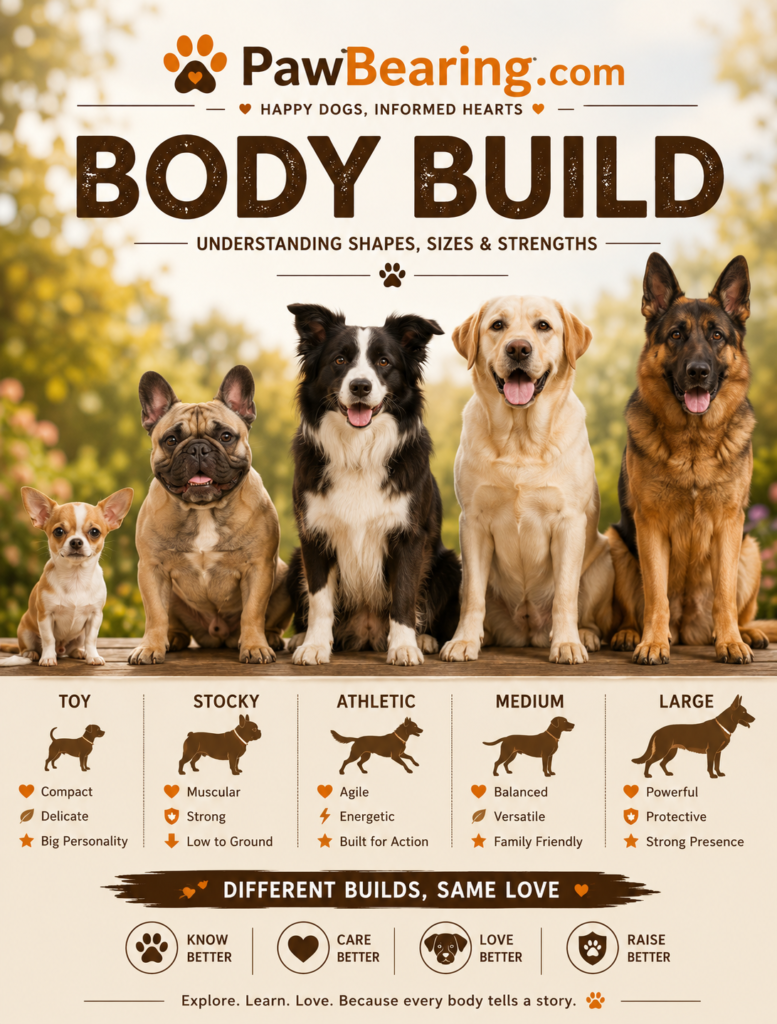
Body-build categories are useful for understanding broad structural themes, not for erasing breed differences.
Grace Is the Result of Structure in Motion
The elegance people associate with long, lean dogs becomes most obvious when the animal moves.
The legs extend.
The back participates.
The hindquarters generate propulsion.
The body covers ground with a style that can look almost effortless.
This is why photographs capture only part of the story.
A dog’s body was not designed merely to create a silhouette while standing.
Structure becomes meaningful through movement.
The Healthy Athletic Dog
The ideal goal is neither maximum thinness nor maximum muscle.
It is a healthy dog whose body condition suits its structure and lifestyle.
The ribs, waist, abdomen, muscles, coat, energy level, and weight trend should be considered together.
Regular veterinary examinations provide another layer of assessment, particularly when changes occur.
Owners of naturally lean breeds often become very good at recognizing the difference between their dog’s normal slenderness and an actual change in condition.
That familiarity is valuable.
Understanding the Beauty of Functional Shape
The long and lean canine body demonstrates one of the most fascinating aspects of dog diversity: form can preserve the history of function.
The deep chest, narrow waist, long legs, powerful rear, and relatively light frame did not simply appear because someone preferred an elegant-looking dog.
In many breeds, these characteristics developed around movement.
They tell a story of pursuit, speed, open landscapes, endurance, and generations of selection.
Today, many of these dogs spend more time sleeping in comfortable homes than chasing anything across open country.
Yet the old design remains visible.
Look at the body and you can still see the athlete.
Understanding that structure also prevents us from imposing one universal idea of what a healthy dog should look like.
Some healthy dogs are broad.
Some are compact.
Some are heavy-boned.
Some are long and low.
And some are unmistakably long, lean, deep-chested, and built to move.
Their shape is not an incomplete version of a heavier dog.
It is a distinct canine design in its own right.
The End
PawBearing.com
 Discover More From Our Family of Websites
 ZodiacBearing (Astrology, Tarot, Numerology, Angel Numbers & Spiritual Guidance)
 Velourana (Beauty, Makeup, Hair Care, Skincare & Beauty Tips)
 HavenBearing (Home, Living, Organization, Décor & Everyday Inspiration)
 PawBearing (Pet Care, Dog Breeds, Animal Health, Training & Pet Products)
 PsyCatherine (Notes From the Journal of a Psychologist on Real Life)